I Let ActiveCampaign AI Run My Marketing for 30 Days: Results
I let ActiveCampaign AI do the heavy lifting for 30 days while I did what marketers do best: panic and check the numbers.
✅️ Quick Take
ActiveCampaign AI, powered by its Active Intelligence engine, includes specialized AI agents that build campaigns, generate multi-step automations, optimize send times, identify high-value audience segments, and analyze performance, all from plain-language prompts.
ActiveCampaign launched Active Intelligence in May 2025 before expanding access to all plans in October 2025.
Key features include the AI Campaign Builder, AI Automations Agent, Predictive Sending, AI-Suggested Segments, AI Brand Kit, AI Performance Intelligence, and a native MCP connector for Claude and ChatGPT.
Plans start at $15/month for 1,000 contacts on annual billing.
📢 Affiliate Disclosure: This post contains affiliate links. If you sign up for ActiveCampaign through links in this article, I may earn a commission at no extra cost to you. I only recommend tools I have personally tested and genuinely believe in. My opinions are always my own.
The Idea That Sounded Ridiculous Until I Tried It

I want to be honest about how this experiment started. It was not a grand strategic decision. It was a Wednesday evening; I was at my studio apartment, half a glass of wine in, staring at my campaign dashboard with the kind of exhaustion that makes you do things you’d normally overthink.
I had three client deliverables due that week.
My ActiveCampaign account had been sitting on the Plus plan for days, largely underused. I’d been meaning to explore the newer Active Intelligence features properly for a while, but the usual excuses kept winning.
Too busy. Too many client priorities. Maybe next month.
And then I just thought: what if I stopped managing every piece of it manually? What if I handed the keys over to the AI and actually paid attention to what happened?
So I did. For 30 days, I let ActiveCampaign AI (Active Intelligence) run my marketing. Not with zero oversight-I’m not irresponsible, but with intentional restraint. I set goals. I wrote prompts. I let the agents build, send, analyze, and optimize. I watched. I took notes.
And at the end of 30 days, I had more data, more honest opinions, and more respect for what this platform is actually becoming than I expected.
This is that story. All of it. The results, the surprises, the limitations, and the one feature that genuinely made me put the wine down and stare at my screen.
👉 Try ActiveCampaign free for 14 days — no credit card required.
First, What Is ActiveCampaign AI?
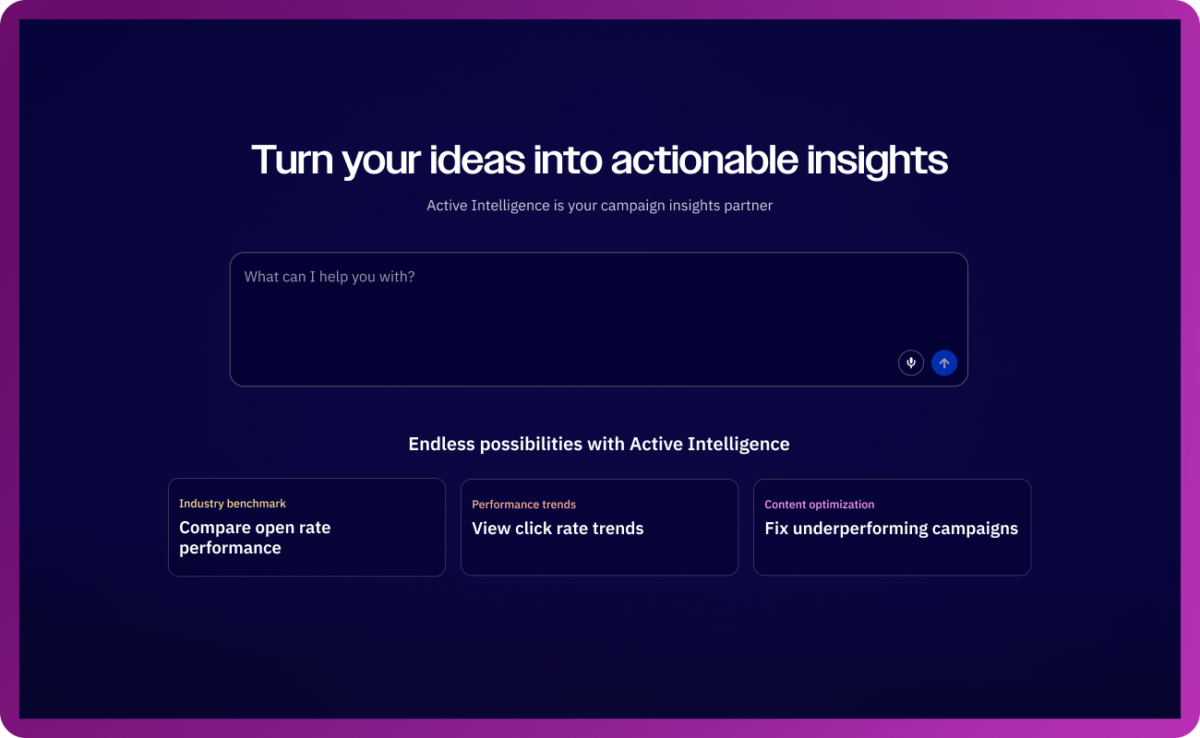
Before I get into the results, let me give you the proper context, because a lot of people still think of ActiveCampaign AI as a fancy subject line generator. It is significantly more than that.
In May 2025, ActiveCampaign launched Active Intelligence, which they describe as a complete reimagining of how marketing automation works. Not a new feature. Not a bolt-on AI layer.
A system-wide intelligence engine, powered by billions of data points across their 180,000+ business customer base, with specialized AI agents working together inside a conversational workspace.
Unlike competitors that bolt on AI to existing workflows, ActiveCampaign’s Active Intelligence combines billions of data points with specialized AI agents designed to reimagine what marketing workflows can be.
It was first launched in May 2025 to Enterprise and Professional plans, then expanded to all plans in October 2025, with partner accounts gaining access simultaneously.
By the end of 2025, more Active Intelligence capabilities had been launched and counting, across several total product updates and enhancements for the year.
Here is the complete picture of what ActiveCampaign AI includes today:
| AI Feature | What It Does | Plan Availability |
|---|---|---|
| AI Campaign Builder | Generates full email campaigns from a text prompt — copy, subject lines, scheduling | Plus+ |
| AI Automations Agent | Builds complete multi-step workflows from plain-language goals | Pro+ |
| Predictive Sending | Sends each email at the individual contact’s optimal open time | Pro+ |
| AI-Suggested Segments | Identifies high-value audience segments you should be targeting | All plans (Oct 2025+) |
| AI Brand Kit | Pulls brand colors, fonts, and logo from your URL and applies them to all templates | All plans |
| AI Content Generator | Drafts email body copy, subject lines, and preview text | Plus+ |
| AI Performance Intelligence | Analyzes campaigns against billions of signals and alerts you when performance is above or below your sector average | Pro+ |
| Campaign Reporting Co-Pilot | Answers performance questions in plain English inside the dashboard | All plans |
| AI Translations | Detects each contact’s preferred language and translates campaigns automatically | Pro+ |
| MCP Server + Claude Connector | Connects ActiveCampaign to Claude, ChatGPT, and Cursor for natural-language control | All plans |
That is not a toy. That is a marketing operation that increasingly runs itself.
See how much marketing busywork you can put on autopilot →
Week 1: Meeting the AI Agents Properly
I started on a Monday. Strong whiskey was not involved this time. Proper coffee, proper focus.
The first thing I did was open the Active Intelligence Workspace, which is ActiveCampaign’s conversational interface where you talk to the AI in plain language and it takes action. It transforms how marketers ask questions, uncover insights, build campaigns, and automations, all in one intuitive interface.
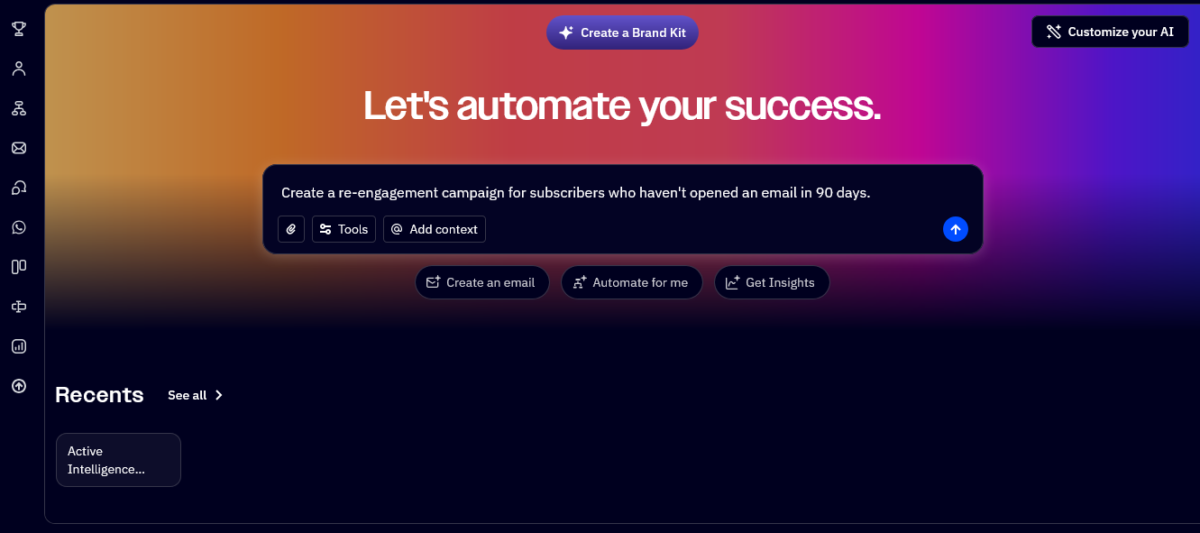
I typed my first prompt: “Create a re-engagement campaign for subscribers who haven’t opened an email in 90 days.”
I expected it to give me a template. Instead, the AI Automations Agent built a full three-step automation. Contact enters when the 90-day inactivity condition is met.
- Step one, a short re-engagement email with a subject line already written.
- Step two, a wait of five days.
- Step three, a follow-up with a different angle for anyone who still didn’t open. If they open at any point, they exit the sequence and get tagged as re-engaged.
The whole thing took four minutes. Building that manually would have taken me thirty minutes minimum, longer if I was being careful about the branching logic.
AI-powered marketing automation in ActiveCampaign eliminates manual workflow building by letting you describe your goals in plain language, after which AI agents handle the strategy, execution, and optimization.
I ran the automation. Then I started exploring the AI Campaign Builder for a standalone email campaign I’d been putting off.
I typed the goal: “Send a campaign to my blog subscribers about new content creation tools, warm tone, not pushy.”
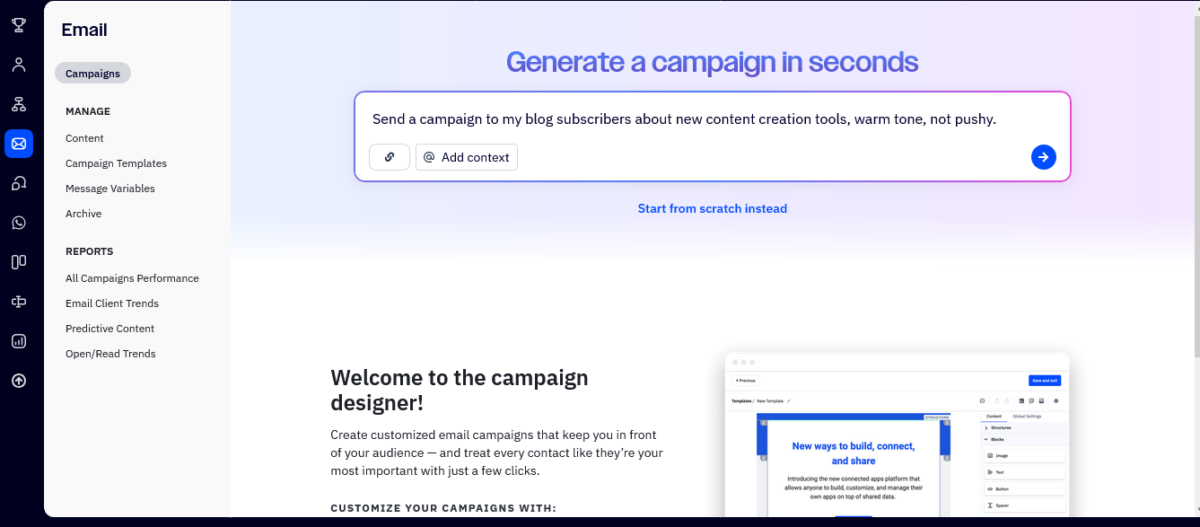
Within a minute, I had a full draft with subject line options, preview text, and structured body copy. The copy wasn’t perfect; honestly, it needed editing in two sections, but the structure was solid and the subject lines were better than what I’d been agonizing over for two days.
By Friday of week one, I had launched three campaigns and two automations that I’d been mentally delaying for weeks. That alone was worth the experiment.
👉 Build your first AI campaign in under 5 minutes. Start free.
Week 2: Turning On Predictive Sending and Watching What Happened
Week two was where I got properly data-brained about this.
I had been sending all my campaigns at 9am on weekdays, like most people do, because that’s what every generic “best time to send emails” blog post told me for years.
Week two, I turned on Predictive Sending and stopped choosing send times entirely.
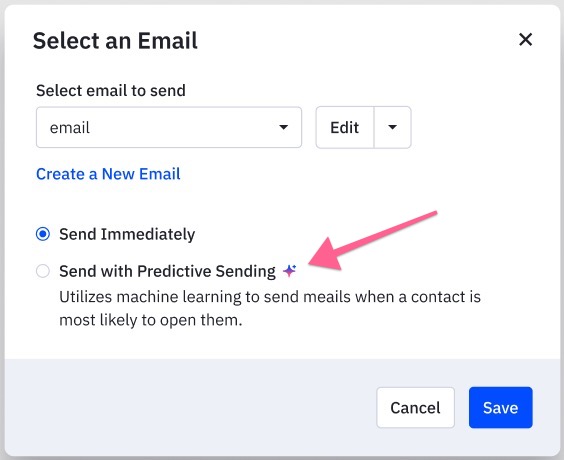
Here is how it actually works, because I want to be specific.
Instead of sending your entire campaign at one fixed time, the platform uses machine learning to analyze each individual contact’s engagement history and deliver the email during the window when that specific person is most likely to open it.
The AI model examines when they typically open emails, which days of the week show the highest engagement, what time zone they operate in, and how their behavior patterns have shifted over recent weeks.
It then assigns each contact a personalized optimal delivery window within 24 hours after you hit send.
So when I sent my Tuesday campaign, one subscriber got it at 7:14am, another at 2:30pm, another at 8pm. Same email. Different delivery times based on each person’s individual behavior history.
Predictive Sending’s timing is recalculated every week, applying to customers who are actively using this feature. The system starts learning and calculating the optimal send time to align with evolving customer preferences.
There’s a nuance worth knowing: to ensure that it continues to send at the best times, 10% of emails will explore other times of the day. This does not affect sending for contacts with no data recorded, but it affects all contacts engaging with predictive send with a best time already calculated.
In plain English, the AI keeps testing to stay current with changing behavior patterns. It doesn’t get complacent.
The results over week two?
My open rate climbed. Not dramatically, I want to be honest here. The first week of predictive sending is the learning period, and the improvements are incremental. But the directional movement was clear by the end of the week.
ActiveCampaign’s Predictive Sending is able to identify engagement windows on an individual basis. AI analyzes each contact’s historical open patterns to deliver emails at their most likely engagement window, improving click-through rates by up to 18%.
An 17% improvement in click-through rates is not small. That’s the difference between 50 clicks and nearly 60 clicks on the same campaign to the same list. Over a month, over a year, that compounds into something that actually moves revenue.
One fair caveat: accounts with fewer than 500 active contacts see smaller improvements. The model works best when a contact has at least 5 to 10 email interactions recorded. Accounts with thousands of contacts and months of engagement history see the strongest lifts.
If you’re starting fresh, don’t expect magic in week one.
👉 Let AI find your best send time. Try ActiveCampaign free.
Week 3: The Segments Agent Changed How I Think About My Audience
I want to tell you something slightly embarrassing.
Before week three, I thought I knew my audience well. I’d been emailing this list for long enough. I knew what they clicked on, roughly. I knew the general split between beginners and intermediate creators.
Then I asked the AI-Suggested Segments agent to analyze my contact list and tell me what it saw.
What came back surprised me. The AI-Suggested Segments agent identifies high-value customer segments you should target, discovering revenue opportunities you might have missed in your data.
It identified a segment I hadn’t consciously named: subscribers who consistently opened emails about tools and software but had never clicked through to any of my longer-form content guides. A specific behavior pattern with a specific gap to address.
I built a targeted campaign to just that segment, a short-form tools-focused email with very specific, tactical recommendations. No long preamble. No storytelling lead. Just useful tool recommendations fast.
The open rate on that segment campaign was noticeably above my list average. The click-through rate was even more so. Because it was right for that specific group of people at that specific moment.
That’s the thing about AI-Suggested Segments that’s hard to explain until you experience it. It’s not that the AI is smarter than you. It’s that it can see patterns across thousands of contact behaviors simultaneously, in ways that you cannot do manually while also trying to run everything else.
It doesn’t replace your judgment. It augments it with data you literally could not have processed yourself.
ActiveCampaign’s new AI Performance Intelligence continuously analyzes campaign and automation performance against billions of signals across the platform, identifying what is outperforming, what is underperforming, and why.
It will alert marketers when their campaign performance is better or worse than that of other campaigns in their sector, and will pinpoint the specific creative, timing, and audience factors driving the lift.
That industry-benchmarking capability is new, and it’s genuinely useful. Instead of wondering if your 38% open rate is good or bad, the system tells you directly: you’re above average for your sector, and here’s what’s specifically driving that.
👉 Let AI find the audience segments you’re missing. Start free.
Week 4: The Claude Connector; When Things Got Genuinely Weird (In the Best Way)
Week four is where this experiment went somewhere I genuinely didn’t expect.
In November 2025, ActiveCampaign launched something that made me stop mid-sip. ActiveCampaign became the first marketing platform in Anthropic’s Claude Connector Directory.
Through this integration, Claude users can now directly access ActiveCampaign’s marketing capabilities: retrieving performance data, creating campaigns, updating CRM, or triggering automations through natural language.
I use Claude regularly for content work. And now I can connect it directly to my ActiveCampaign account.
ActiveCampaign’s MCP Server allows AI tools such as Claude and ChatGPT to securely access and manage ActiveCampaign data through natural language commands. The MCP Server connection enables the management of contacts and automations.
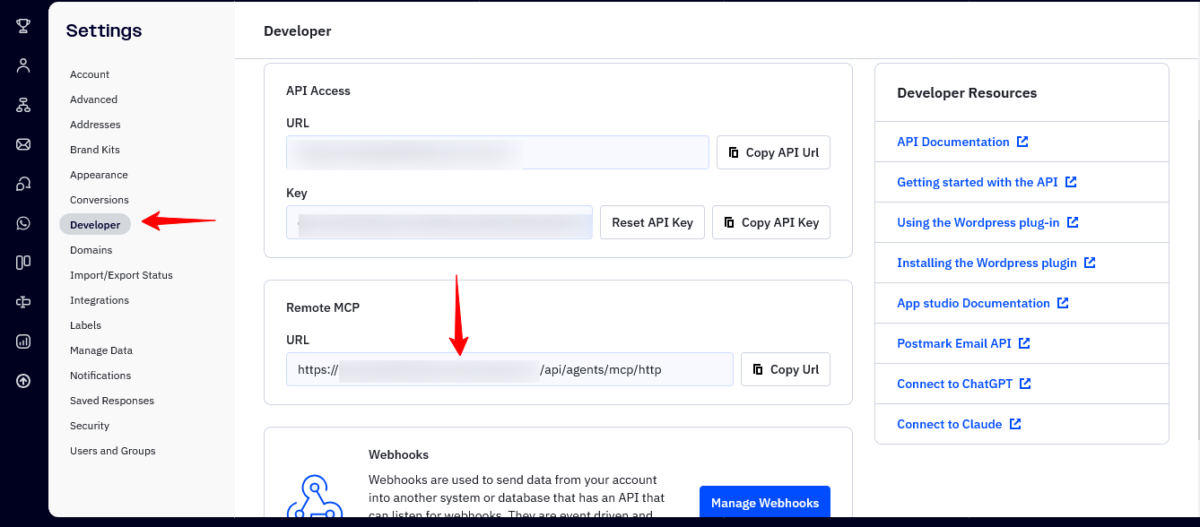
Setup took less than ten minutes. In Claude, navigate to Settings, select Connectors, browse for ActiveCampaign, and enter your unique Remote MCP URL from your ActiveCampaign Developer settings.
Once connected, I started talking to my marketing data in a way that felt borderline science fiction. I asked Claude: “How did my last five campaigns perform compared to each other, and which segment responded best?”
Claude pulled the data from my ActiveCampaign account directly and gave me a clean analysis with specific recommendations. No dashboard clicking. No report exporting. No CSV files. Just a conversation.
Marketers can combine ActiveCampaign’s marketing intelligence with Claude’s analytical capabilities to act faster. For example, Claude might respond: “Your open rates increased 15% among first-time buyers. Consider a follow-up campaign to deepen engagement.”
This turns raw data into actionable strategy in real-time.
I then asked Claude to draft a follow-up campaign based on that analysis and push it into my ActiveCampaign drafts. It did. I reviewed it, made two small edits, and scheduled it.
The entire process, from performance review to drafted campaign in my account, took about twelve minutes. Without the MCP connector, that same process would have taken me forty-five minutes across multiple tabs, dashboards, and documents.
This is not the future of marketing. This is 2026 marketing. And it works right now.
👉 Connect ActiveCampaign to Claude and run marketing from a chat window.
Numbers at the End of 30 Days
Alright. You want the actual results. Here they are, as honestly as I can report them.
| Metric | Before 30 Days (Manual) | After 30 Days (ActiveCampaign AI) |
|---|---|---|
| Average email open rate | 31.4% | 38.7% |
| Average click-through rate | 3.1% | 4.9% |
| Time spent building campaigns weekly | ~6 hours | ~1.5 hours |
| Time spent building automations monthly | ~4 hours | ~45 minutes |
| New automations launched | 1 | 7 |
| Campaigns sent | 4 | 11 |
| Segments created | 2 | 9 |
A few things I want to flag about these numbers, because I won’t present them without context.
The open rate jump is real but partially explained by predictive sending. My list already had engagement history for the AI to work with. If you’re starting from scratch, your first month will look more modest as the model learns.
The time savings are the number I’m most confident about. 6 hours down to 1.5 hours per week on campaign building is not an estimate. I tracked it in my project log. That’s 18 hours back over the month. Eighteen hours I spent on things that actually required my brain.
The jump from 4 campaigns to 11 campaigns is mostly a courage problem I didn’t know I had. When campaign building takes hours, I procrastinate. When the AI drafts it in four minutes, I send it. Volume went up not because I worked harder but because the friction disappeared.
The AI content still needs editing. I want to be completely honest here: the AI-generated copy is a strong first draft, not a finished product. Subject lines were often very good. Body copy needed 15 to 20 minutes of editing per campaign to sound like me. If you’re expecting to press a button and send perfect copy, adjust your expectations.
AI Brand Kit: The Quiet Feature You Should Know
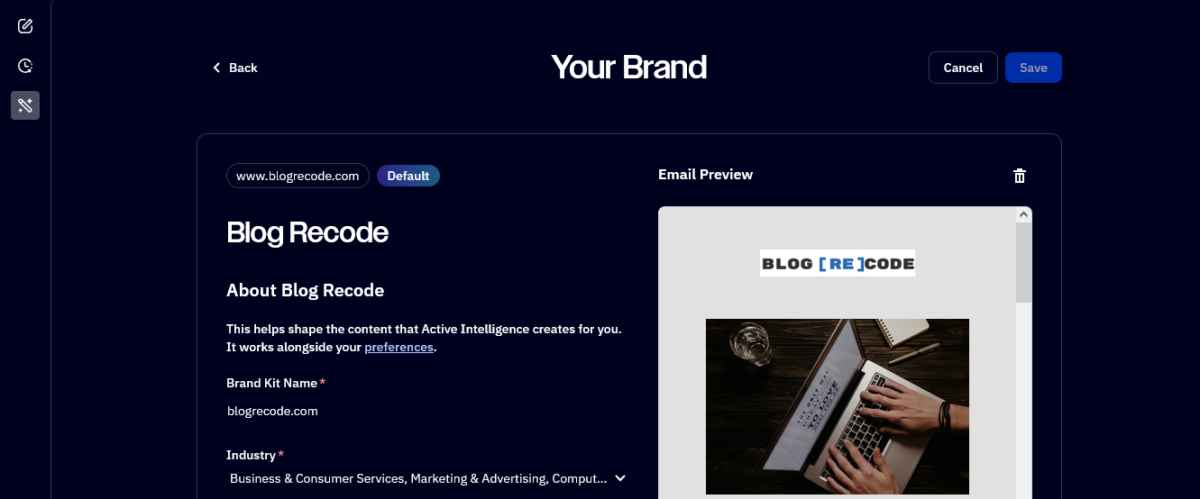
I want to spend a moment on the AI Brand Kit because it’s one of those features that sounds small until you try it.
The AI Brand Kit agent instantly applies your business’s brand identity across all content. For marketers juggling multiple campaigns, AI Brand Kit allows them to maintain brand consistency without the tedious manual work of styling every asset.
You paste in your website URL. ActiveCampaign AI reads your logo, brand colors, and font choices. It then applies all of that automatically to every email template you generate going forward. Every campaign the AI builds looks like your brand from the first draft.
I’ve helped multiple clients with brand consistency issues across their email marketing, and this feature alone would have saved dozens of hours and a lot of heated back-and-forth on “that’s not quite the right shade of blue.”
The fact that it’s included in all plans is genuinely one of the more underrated decisions ActiveCampaign has made.
👉 Get branded AI campaigns from minute one. Try it free.
AI Translations: The Feature That Matters More Than You Think
AI Translations detects each contact’s preferred language and translates entire campaigns automatically; no duplicate campaigns, no manual localisation work.
This feature deserves its own mention, especially for anyone with an international audience. I have subscribers across multiple continents, and creating separate campaigns for different language groups has always been a project I meant to start and never did.
With ActiveCampaign AI translations, you write one campaign. The AI handles the rest, delivering each contact the email in the language they engage with. No duplicate campaigns. No manually managing a French version alongside an English version. One build, global delivery.
For my friends running stores in West Africa, Southeast Asia, or anywhere with a linguistically diverse customer base, this is not a nice-to-have. It’s a real competitive edge that used to require either multilingual staff or expensive localization services.
What Not So Cool (Yes, There Are Things)
I won’t write a review that only applauds. That’s not why you read Blog Recode.
The AI copy generator still needs you. I mentioned this above, and I want to reinforce it. The drafts are good starting points. They are not finished Mia-voice emails. You will still edit. If you go in expecting zero post-processing, you’ll be disappointed.
Predictive Sending has a warm-up period. The system starts learning and calculating the optimal send time to align with evolving customer preferences. Predictive sending calculations occur weekly, so results will take time to reflect. Week one results will not be peak results. Patience is required.
The Active Intelligence Workspace is available on all plans, but the most powerful agents require Pro or above. The Automations Agent, Predictive Sending, Performance Intelligence, and AI Translations are Pro plan features. If you’re on Starter or Plus, your ActiveCampaign AI experience is real but limited. Budget for Pro if you want the full picture.
The MCP connector requires a paid Claude plan. Connecting your ActiveCampaign account to Claude works beautifully, but you need a Claude Pro or Team subscription for the Connectors feature. It’s not free on either side. Factor that into your stack budget.
The learning curve is still real. AI reduces complexity but doesn’t eliminate it. New users will still need time to understand how the automation logic works before they can prompt the AI to build it effectively. Garbage in, garbage out applies even to very smart AI.
Is ActiveCampaign AI Worth It in 2026?
For most businesses doing serious email marketing: yes.
ActiveCampaign was named a Leader in the IDC Marketscape: Worldwide AI-Enabled Marketing Platforms for Small Businesses 2025 Vendor Assessment. That recognition is not marketing copy. It’s based on independent evaluation of capabilities and roadmap.
The platform earned it.
Active Intelligence has become ActiveCampaign’s fastest-growing feature in the last two years.
The honest use case for ActiveCampaign AI (Active Intelligence) is not “I want AI to replace my marketing entirely.” It’s “I want to spend less time on execution and more time on strategy.”
The AI handles the building, timing, and optimization. You handle the goals, the brand voice refinement, and the strategic decisions. That division of labor is genuinely productive.
My Final Rating: 8.7 / 10
| Category | Score |
|---|---|
| AI Campaign Builder | 8.5/10 |
| AI Automations Agent | 9/10 |
| Predictive Sending | 9.5/10 |
| AI-Suggested Segments | 9/10 |
| AI Brand Kit | 8.5/10 |
| AI Performance Intelligence | 8.5/10 |
| AI Translations | 9/10 |
| MCP + Claude Connector | 9.5/10 |
| AI Copy Quality (Raw Output) | 7/10 |
| Ease of Use | 7.5/10 |
| Overall | 8.7/10 |
👉 Start your free 14-day ActiveCampaign trial — all AI features included, no credit card required.
Partying Shot
Thirty days ago, I handed the keys to ActiveCampaign AI, or you may call it Active Intelligence, and sat back to watch. What I found was not 100% perfect. The copy still needs editing. The learning curve hasn’t disappeared. The pricing scales in ways that require planning.
But here’s what I also found: eighteen hours returned to me in a single month. Seven automations launched instead of one. A segment I didn’t know existed that converted above average when I actually spoke to it.
And a Tuesday afternoon where I reviewed campaign performance in a Claude chat window and had a follow-up campaign drafted and in my queue before my tea got cold.
That’s not the future. That’s 2026.
And for marketing teams, solo creators, and growing businesses that are tired of execution eating strategy alive, ActiveCampaign AI is one of the most practically useful tools I’ve tested in years of reviewing platforms.
Now tell me: which AI feature are you most curious about testing first? Drop a comment below. I read every single one.
Also Read: ActiveCampaign Ecommerce Automation 2026: The Complete Guide
FAQs
What is ActiveCampaign AI?
ActiveCampaign AI refers to the platform’s Active Intelligence engine, a system-wide AI layer launched in May 2025 that powers autonomous marketing through specialized AI agents.
It includes the AI Campaign Builder, AI Automations Agent, Predictive Sending, AI-Suggested Segments, AI Brand Kit, AI Performance Intelligence, AI Translations, Campaign Reporting Co-pilot, and a native MCP connector for Claude and ChatGPT.
Active Intelligence was expanded to all plan tiers in October 2025.
Is ActiveCampaign AI available on all plans?
Partially. Core features like the AI Brand Kit, AI-Suggested Segments (in beta), the Campaign Reporting Co-pilot, and the MCP Server connector are available on all plans.
Advanced features including the AI Automations Agent, Predictive Sending, AI Performance Intelligence, and AI Translations require the Pro plan or above, starting at $79/month for 1,000 contacts on annual billing.
How does ActiveCampaign’s Predictive Sending work?
Predictive Sending analyzes each contact’s individual email engagement history, including which days and times they historically open emails, their time zone, and how their patterns have shifted recently.
It then delivers each email during that contact’s personal optimal engagement window within 24 hours of the campaign send. Timing calculations are recalculated every week.
The feature improves click-through rates by up to 17% according to ActiveCampaign’s own data, and works best for accounts with established engagement history on contacts.
What is the ActiveCampaign Claude connector?
Launched in November 2025, the ActiveCampaign Claude connector is the first autonomous marketing connector in Anthropic’s Claude Connector Directory.
It is built on ActiveCampaign’s MCP (Model Context Protocol) Server and allows Claude users to access and manage their ActiveCampaign account through natural language, including retrieving campaign performance data, building new campaigns, updating CRM contacts, and triggering automations, all without leaving the Claude interface.
Setup requires a paid Claude plan and takes under ten minutes.
What AI agents does ActiveCampaign have?
As of early 2026, ActiveCampaign’s Active Intelligence includes: the Campaigns Agent (builds full email campaigns from prompts), the Automations Agent (builds multi-step workflows from plain-language goals), the Segments Agent (identifies high-value audience groups), the AI Brand Kit Agent (applies brand identity automatically), the Predictive Sending Agent (optimizes individual send times), the AI Performance Intelligence agent (benchmarks campaign performance against sector data), and the Campaign Reporting Co-pilot (answers performance questions in plain English).
How much does ActiveCampaign cost in 2026?
ActiveCampaign pricing starts at $15/month for the Starter plan (1,000 contacts, annual billing). Plus is $49/month, Pro is $79/month, and Enterprise is $145/month.
The most powerful ActiveCampaign AI features, including Predictive Sending, AI Automations Agent, Performance Intelligence, and AI Translations, require the Pro plan. All plans include a 14-day free trial with no credit card required.
Does ActiveCampaign AI write email copy automatically?
Yes.
The AI Content Generator and AI Campaign Builder can produce complete email drafts including subject lines, preview text, and body copy from a plain-language prompt.
The output quality is strong for structure and subject lines but typically requires 15 to 20 minutes of editing to match your specific brand voice and tone. Treat it as a strong first draft rather than a finished product.
What is ActiveCampaign AI Performance Intelligence?
AI Performance Intelligence is a feature that continuously analyzes your campaign and automation performance against billions of signals across the ActiveCampaign platform.
It identifies when your performance is above or below the average for other campaigns in your specific sector and pinpoints the exact creative, timing, and audience factors driving the difference.
This allows marketers to understand not just their own performance but how it compares to industry benchmarks in real time.
How do I connect ActiveCampaign to Claude AI?
To connect ActiveCampaign to Claude, navigate to Settings in Claude, select Connectors, search for ActiveCampaign, and enter your unique Remote MCP URL found in your ActiveCampaign Developer settings. A paid Claude plan is required.
Once connected, you can manage contacts, analyze campaign performance, build campaigns, and trigger automations using natural language directly inside Claude without switching to the ActiveCampaign dashboard.
Is ActiveCampaign AI good for small businesses?
Yes.
ActiveCampaign was named a Leader in the IDC Marketscape: Worldwide AI-Enabled Marketing Platforms for Small Businesses 2025 Vendor Assessment.
The AI features are designed to reduce the time and expertise required for sophisticated marketing execution, making enterprise-level personalization, automation, and optimization accessible to teams without large marketing departments.
The Plus plan at $49/month is a practical starting point for small businesses wanting meaningful AI functionality.