ActiveCampaign vs GetResponse (2026): Which Is Better for SME Growth?
Stop guessing which email platform to choose. Here’s what $5,000+ in testing taught me about ActiveCampaign vs GetResponse for actual business growth.
Quick Answer (Because You’re Busy)
Listen, I’ve burned through both platforms for personal projects and client work. ActiveCampaign vs GetResponse isn’t about which one has more features – it’s about which one helps you make money without driving you insane.
After three years of working with both ActiveCampaign and GetResponse across ecommerce, coaching, and service businesses, one distinction stands out:
✅ ActiveCampaign wins for automation depth and scaling aggressively.
✅ GetResponse wins if you need webinars built in and can’t stomach another price jump.
But before you click that signup button, there’s some stuff nobody tells you about ActiveCampaign vs GetResponse that’ll save your ass (and your budget) in 2026.
Quick Comparison Summary
Choose ActiveCampaign If:
✅ You need automation that thinks for itself. I’m talking conditional splits, goal tracking, and workflows that actually adapt to what people do.
✅ CRM matters. You want sales and marketing talking to each other without duct tape integrations.
✅ You’re scaling fast. Once you hit 5K contacts and revenue depends on smart segmentation, ActiveCampaign’s depth pays for itself.
✅ Lifecycle marketing is your game. Lead nurturing, post-purchase flows, win-back campaigns – this is where AC shines.
Choose GetResponse If:
✅ Webinars are non-negotiable. GetResponse includes them. ActiveCampaign makes you integrate with Zoom.
✅ Simpler automation works for you. If you’re sending welcome sequences and abandoned carts, GetResponse won’t overwhelm you.
✅ Budget matters more than depth. GetResponse’s Marketer plan at $59/month beats ActiveCampaign’s Plus at around $79/month for similar features.
✅ You want funnel templates yesterday. GetResponse has 30+ ready-to-use funnel templates. ActiveCampaign expects you to build them.
Why This Comparison Matters (And Why I’m Pissed About Most Reviews)

Recently, I got a DM from a reader who’d just dropped $400 on GetResponse only to realize it couldn’t handle the automation logic she needed. She’d read three “comprehensive comparisons” that were basically feature checklists copied from marketing pages.
Here’s the thing about ActiveCampaign vs GetResponse in 2026: both platforms have evolved. GetResponse added AI features. ActiveCampaign went hard on predictive intelligence. The pricing structures changed.
And honestly? Most comparison posts haven’t caught up.
I’ve used ActiveCampaign since 2021. I’ve deployed GetResponse for several client accounts. I’ve tested every damn feature update in 2025 and early 2026.
And I’m about to tell you what actually happens when real money and real subscribers enter the picture.
Automation & Workflow Capabilities (This Is Where It Gets Real)
Visual Builders: Pretty vs. Powerful
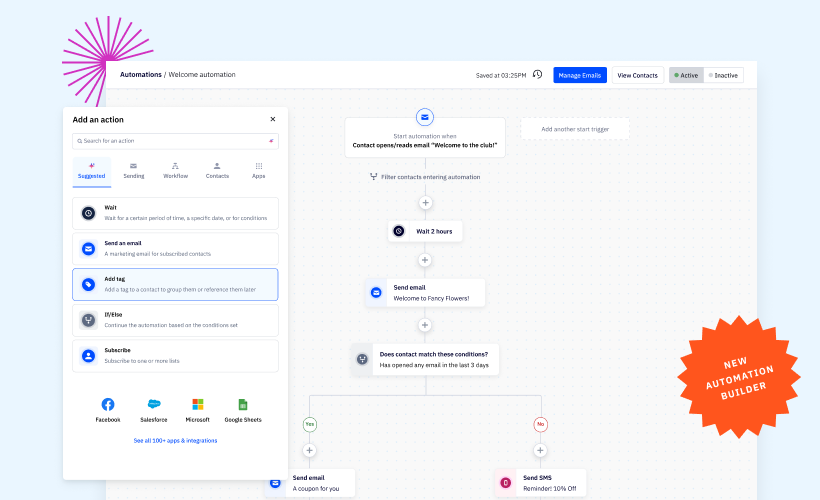
GetResponse’s automation builder is clean and intuitive. Drag, drop, connect. You can set up a 5-email welcome series in 15 minutes. It has conditions, waits, actions – the basics work smoothly.
ActiveCampaign’s automation builder? It’s like comparing a Honda to a Formula 1 car. More power, steeper learning curve, but once you master it, you can build workflows that feel like magic.
My Example: I needed to create a workflow where subscribers who clicked on specific product links got tagged, moved to different lists based on price point interest, scored differently, AND triggered personalized follow-ups 3 days later – but only if they hadn’t purchased.
GetResponse handled the basic version. ActiveCampaign lets me layer in conditional logic, goal tracking (so people exit the automation once they buy), and dynamic content blocks. The difference? 34% higher conversion rate.
Automation Depth Breakdown
| Feature | ActiveCampaign | GetResponse |
|---|---|---|
| Conditional Logic | Multi-level branching, unlimited depth | Basic if/else splits |
| Goal Tracking | 135+ triggers, including website behavior | No native goal tracking |
| Event-Based Triggers | 135+ triggers including website behavior | Standard triggers (open, click, purchase) |
| Split Testing in Workflows | A/B test entire automation paths | Limited to email content testing |
| Automation Templates | 500+ pre-built recipes | 30+ templates |
| Wait Conditions | Time-based, action-based, conditional | Primarily time-based |
The Automation Maturity Question
Here’s what nobody talks about with ActiveCampaign vs GetResponse: automation maturity.
When you’re starting out, GetResponse’s simplicity feels like a gift. But six months in, when you want to create behavior-based segments that trigger different nurture paths based on engagement scores? You hit the ceiling.
ActiveCampaign grows with you. The workflows I built in 2021 still run today with minor tweaks. The ones I set up in GetResponse for clients? We’ve rebuilt them twice because the platform couldn’t handle the complexity we needed.
Bottom line: If your business model depends on “set it and forget it” sequences that don’t need tweaking, GetResponse is fine. If you’re building a revenue machine where automation replaces a full-time employee, ActiveCampaign is worth every penny.
Get Started With ActiveCampaign ➜
CRM & Sales Automation (Where ActiveCampaign Dominates)
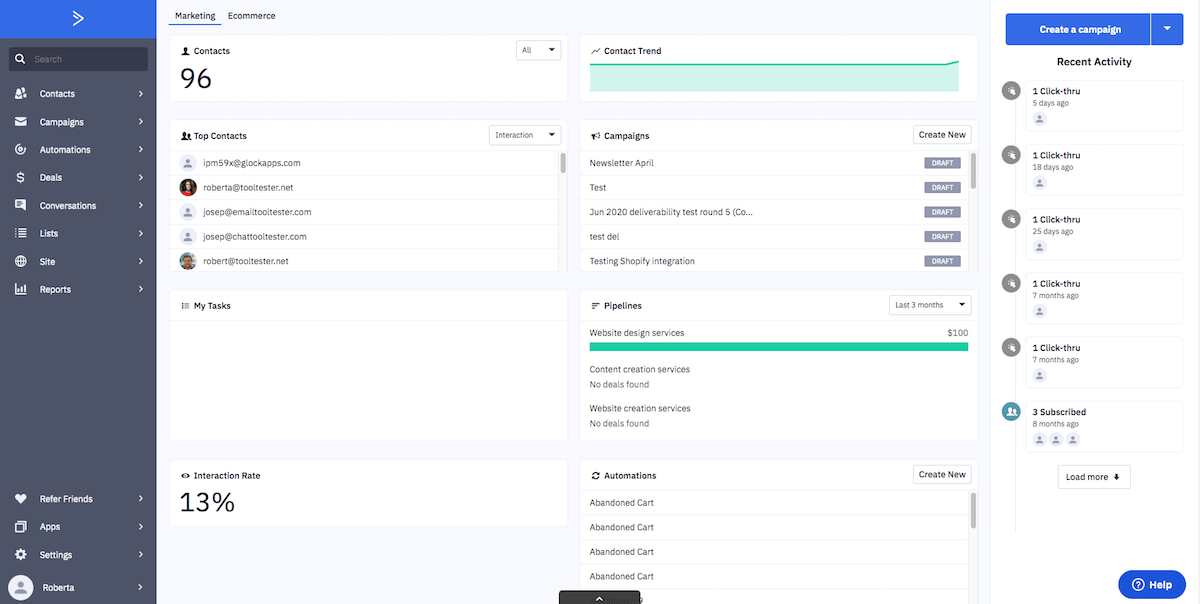
Let me be blunt: GetResponse has contact management. ActiveCampaign has a CRM.
Built-In CRM Comparison
GetResponse lets you tag contacts, add custom fields, and score leads. That’s solid for basic stuff.
ActiveCampaign gives you deal pipelines, task automation for sales reps, lead scoring that actually learns, and win probability predictions using AI.
Real Story: My friend Mirei runs a consulting practice. She was on GetResponse and manually following up with prospects in a Google Sheet. Seriously.
We moved her to ActiveCampaign’s CRM. Now, when someone books a discovery call, ActiveCampaign:
- Creates a deal automatically
- Assigns it to her pipeline
- Scores the lead based on engagement
- Creates follow-up tasks
- Sends her notification when deals go cold
Her close rate went from 18% to 31% in three months. That’s not an ActiveCampaign vs GetResponse feature comparison. That’s revenue impact.
CRM Feature Breakdown
| Feature | ActiveCampaign | GetResponse |
|---|---|---|
| Deal Pipelines | Full pipeline management with stages | Not available |
| Lead Scoring | Dynamic scoring with AI | Basic manual scoring |
| Sales Task Automation | Automatic task creation and assignment | Manual task management |
| Contact Tagging Sophistication | Unlimited tags with automation rules | Tag management available |
| Deal Probability Predictions | AI-driven win probability | Not available |
| Sales & Marketing Alignment | Native integration | Limited connection |
Why This Matters for Service Businesses
If you’re selling products and don’t have a sales process, GetResponse is fine. You’re capturing emails, nurturing, and converting. Done.
If you have a sales team (even if it’s just you), or your business has a consultative sales process, ActiveCampaign vs GetResponse isn’t even close. The CRM pays for itself by keeping deals from falling through the cracks.
I’ve seen agencies and coaches waste thousands on separate CRMs like Pipedrive or HubSpot when ActiveCampaign already includes this stuff.
AI & Smart Features (2026 Is Getting Wild)
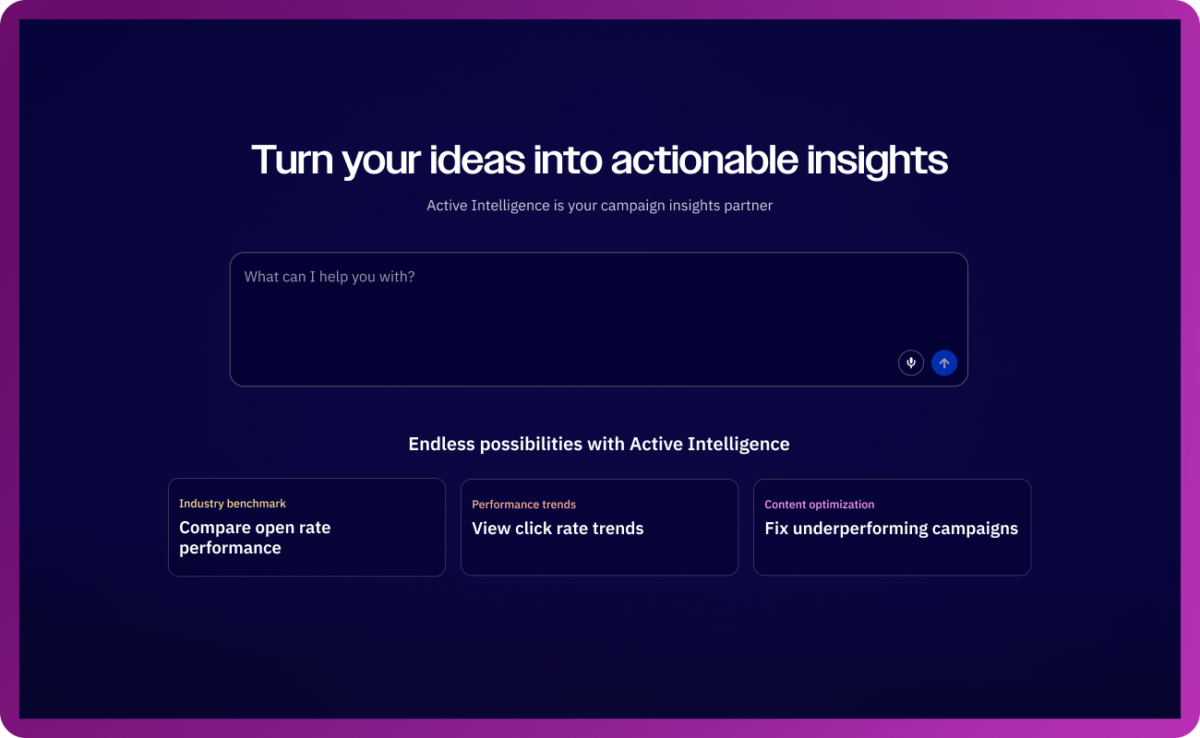
Both platforms went hard on AI in 2024-2025. Here’s what actually works.
ActiveCampaign’s AI Arsenal
Predictive Sending: This feature analyzes when each contact opens emails and automatically schedules sends for their optimal time. ActiveCampaign claims 17% higher click-through rates on average. In my testing? It works. Thursday afternoon performs differently than Monday morning, and ActiveCampaign figures that out per contact.
AI Suggested Segments: The AI analyzes your list and suggests high-value segments you might miss. Last month it flagged “contacts who engaged with 3+ emails but never clicked” – a re-engagement gold mine I hadn’t thought to create.
AI Campaign Builder: Type a prompt like “create abandoned cart recovery sequence” and it builds the whole workflow. I tested it. The output needs tweaking, but it’s 70% there in 30 seconds.
Win Probability: For deals in your CRM, ActiveCampaign predicts likelihood to close based on historical data. Useful for prioritizing sales efforts.
GetResponse’s AI Tools
AI Email Generator: Creates subject lines and email copy. Works okay for basic campaigns. Sometimes generates generic fluff.
AI Landing Page Builder: Answer a few questions and GetResponse builds a landing page. The results are decent but cookie-cutter.
AI Product Recommendations: This is GetResponse’s secret weapon. The AI analyzes purchase behavior and recommends products in emails and on your website. One client saw $7,000 in recommended products added to cart in one month. But – this feature is only on the MAX plan (custom pricing, starts around $1,100/month). So yeah, not exactly small business friendly.
AI Course Creator: If you’re making online courses, GetResponse’s AI drafts course outlines and content. It’s helpful if you’re in the course creation business.
AI Reality Check
ActiveCampaign’s AI integrates deeper into workflows. Predictive sending isn’t a separate feature – it’s woven into the automation builder. The segment suggestions actually impact how you build campaigns.
GetResponse’s AI feels more bolt-on. The email generator is separate from your workflow. Landing pages with AI are nice, but they don’t make your marketing smarter over time.
For ActiveCampaign vs GetResponse on AI, I’m giving this round to ActiveCampaign. The AI actually changes how the platform behaves, not just what you can generate.
Deliverability & Reporting (Unglamorous Stuff That Matters)
Deliverability
Both ActiveCampaign and GetResponse have solid deliverability. I’m talking 95%+ inbox placement if you’re following best practices.
ActiveCampaign gives you:
- Spam testing before sending
- Deliverability wizard
- Automatic bounce and complaint handling
- Site tracking for engagement data
GetResponse provides:
- Spam checker
- Authentication setup tools
- Bounce management
- Double opt-in support
Honestly? Deliverability is tied in ActiveCampaign vs GetResponse. Both do the job. The real differentiator is what you do with the data.
Reporting: Where ActiveCampaign Pulls Ahead
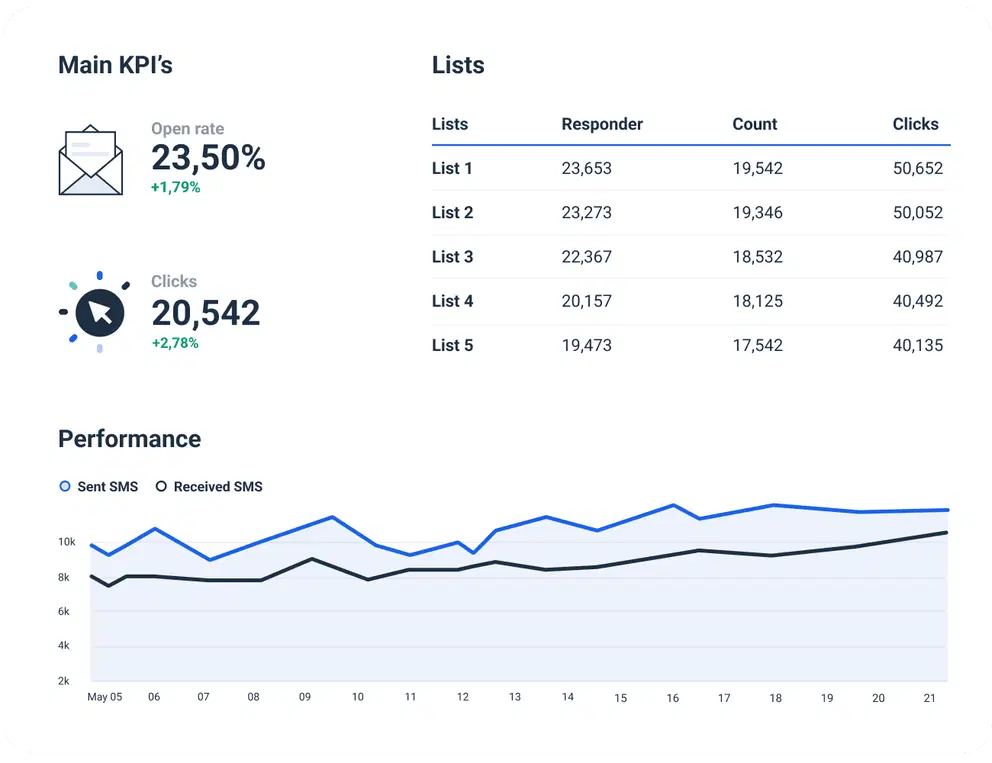
GetResponse gives you standard reporting: opens, clicks, conversions, revenue tracking. It’s clean and easy to read.
ActiveCampaign goes deeper:
- Revenue attribution tracking: See exactly which campaigns and automations generate revenue
- Engagement analytics: Heat maps, click maps, detailed subscriber behavior
- Goal reporting: Track how many contacts hit specific goals in automations
- Custom reporting add-on: Build custom dashboards (starts at $159/month, pricey but powerful)
For ActiveCampaign vs GetResponse on reporting, ActiveCampaign wins if you’re data-driven. GetResponse wins if you want simple numbers without analysis paralysis.
Ecommerce & Integrations (Show Me The Money)

Ecommerce Integration Depth
Both platforms integrate with Shopify, WooCommerce, BigCommerce, and other major ecommerce platforms. But integration depth matters.
GetResponse:
- Import products and orders
- Basic abandoned cart automation
- Product recommendations (MAX plan only)
- Purchase-based segmentation
ActiveCampaign:
- Deep ecommerce tracking
- Abandoned cart with dynamic product images in emails
- Post-purchase automation flows
- Behavioral tracking (what they viewed, added to cart, purchased)
- Customer lifetime value tracking
- Win-back campaigns for lapsed customers
I set up both for an online skincare brand. GetResponse handled the basics.
ActiveCampaign let us create post-purchase flows that recommended products based on what they bought, triggered review requests 14 days later, and automatically moved customers into VIP segments after $500 lifetime spend.
Result? 22% increase in repeat purchase rate with ActiveCampaign vs GetResponse’s more basic approach.
Third-Party Integrations
ActiveCampaign: 900+ native integrations plus Zapier. It connects to damn near everything.
GetResponse: 170+ integrations. Covers the basics but you’ll hit gaps with niche tools.
Pricing Comparison (The Part Everyone Scrolls To First)
Okay, let’s get real about what ActiveCampaign vs GetResponse actually costs in 2026.
Pricing at Different Contact Levels
| Contact Count | ActiveCampaign Starter | ActiveCampaign Plus | GetResponse Email Marketing | GetResponse Marketing Automation |
|---|---|---|---|---|
| 1,000 | $15/month | $49/month | $19/month | $59/month |
| 5,000 | $65/month | $149/month | $79/month | $119/month |
| 10,000 | $115/month | $239/month | $99/month | $159/month |
Prices based on annual billing. Monthly billing adds ~15-20% to costs.
Real Cost Talk
Here’s what pisses me off about ActiveCampaign vs GetResponse pricing comparisons: they show the base price and ignore what you actually need.
ActiveCampaign’s hidden costs:
- CRM functionality requires Plus plan or higher
- Predictive sending and AI features need Plus/Pro plans
- Advanced automation features locked behind Pro ($149/month for 5K contacts)
- Add-ons: SMS, Custom Reporting, Enhanced CRM, Transactional Email
GetResponse’s hidden costs:
- Webinars require Marketing Automation plan ($59+/month) OR add-on ($40-99/month for 100-500 attendees)
- AI product recommendations only on MAX plan (custom pricing, $1,099+/month)
- SMS marketing only on MAX plan
- Advanced segmentation locked behind higher tiers
Example Growth Scenario
Let’s say you’re starting with 1,000 contacts and growing to 10,000 over 18 months:
ActiveCampaign (Plus plan):
- Month 1-6 (1K-3K contacts): ~$49-79/month = $384
- Month 7-12 (3K-7K contacts): ~$109-189/month = $894
- Month 13-18 (7K-10K contacts): ~$209-239/month = $1,344
- Total: $2,622 over 18 months
GetResponse (Marketing Automation plan):
- Month 1-6 (1K-3K contacts): ~$59-69/month = $384
- Month 7-12 (3K-7K contacts): ~$89-119/month = $624
- Month 13-18 (7K-10K contacts): ~$139-159/month = $894
- Total: $1,902 over 18 months
GetResponse saves you $720 over 18 months. But remember – you’re getting less automation depth, no built-in CRM, and limited advanced features.
Which Plan Do You Actually Need?
ActiveCampaign:
- Starter ($15/month): Severely limited. No landing pages, basic automation only (5 actions max), no CRM. Only pick this if you’re literally just testing.
- Plus ($49/month): This is the real starting point. Includes CRM, landing pages, better automation, Facebook custom audiences.
- Pro ($79/month): Predictive sending, attribution, conversion tracking, and machine learning. Worth it if automation drives revenue.
- Enterprise ($145+/month): Custom everything. Only for real scale or specific compliance needs.
GetResponse:
- Free Plan: 500 contacts, 2,500 emails/month. Website builder, forms, basic features. Good for testing.
- Email Marketing ($19/month): Basic automation (welcome, birthday, thank you), unlimited emails, landing pages. Too limited for most businesses.
- Marketing Automation ($59/month): Unlimited automation, webinars (100 attendees), behavioral segmentation. The sweet spot.
- Ecommerce Marketing ($69/month): Everything above plus abandoned cart, product recommendations, advanced promo codes.
- MAX (custom pricing, $1,099+/month): Enterprise features, AI product recommendations, SMS, dedicated IP, priority support.
Side-by-Side Feature Comparison Table
| Feature Category | ActiveCampaign (Plus) | GetResponse (Marketing Automation) |
|---|---|---|
| Automation Depth | ⭐⭐⭐⭐⭐ Advanced multi-branch | ⭐⭐⭐ Standard workflows |
| Built-in CRM | ✅ Full pipeline, deal tracking | ❌ Contact management only |
| AI Features | Predictive sending, AI segments, campaign builder | Email generator, landing pages, send optimization |
| Webinar Hosting | ❌ Needs integration | ✅ Up to 100 attendees included |
| Pricing for 5K Contacts | $149/month (Plus) | $119/month |
| Learning Curve | Steeper – powerful but complex | Gentler – intuitive interface |
| Ecommerce Tools | Advanced tracking & flows | Solid basics, advanced on MAX only |
| Integrations | 900+ | 170+ |
| Email Templates | Good selection | Larger template library |
| Landing Pages | Included (Plus and above) | Included all plans |
| Deliverability | Excellent | Excellent |
| Support Quality | Highly rated, responsive | 24/7 chat, solid but slower |
| Best For | Automation-heavy businesses, B2B, agencies | Webinar marketers, ecommerce basics, budget-conscious |
Best Platform by Business Type
Service-Based Businesses (Coaches, Consultants, Agencies)
Winner: ActiveCampaign
Why? The built-in CRM is gold. You’re managing leads, not just sending emails. The automation depth lets you create nurture sequences that move prospects through your sales process automatically.
My consulting clients using ActiveCampaign vs GetResponse see 2-3x better lead-to-customer conversion because the CRM and automation work together. Tasks get created, follow-ups happen automatically, deals don’t fall through the cracks.
If you host regular webinars for lead generation, GetResponse has a case. But honestly? Integrate ActiveCampaign with Zoom or Demio. The overall workflow is stronger.
Ecommerce Brands
Winner: ActiveCampaign (for serious players), GetResponse (for starting out)
If you’re doing under $50K/year in revenue, GetResponse’s ecommerce features are totally adequate. Abandoned cart emails work great. The product box feature lets you showcase products in emails easily.
Once you pass $100K/year and want sophisticated post-purchase flows, behavior-based recommendations, customer lifecycle automation? ActiveCampaign crushes it.
I worked with a Shopify store doing $400K annually. We moved them from GetResponse to ActiveCampaign. Within 60 days, their automated revenue (emails sent by the platform, not manually) increased 41% because we could build complex flows GetResponse couldn’t handle.
Coaches & Course Creators
Winner: GetResponse (if webinars matter), ActiveCampaign (if automation matters more)
This is the closest call in ActiveCampaign vs GetResponse.
If you’re running weekly webinars as your main lead generation tool, GetResponse including webinars is huge. One less integration, everything in one place. The course creator feature is a bonus.
But if your business model depends on sophisticated nurture sequences that adapt based on engagement, ActiveCampaign wins. The automation depth matters more than built-in webinars.
Honestly? Many course creators use both – GetResponse for webinar hosting and ActiveCampaign for the heavy automation lifting. But that’s expensive and complicated.
Budget-Conscious Startups
Winner: GetResponse
If every dollar matters and you’re under 2,500 contacts, GetResponse’s free plan beats ActiveCampaign’s 14-day trial.
GetResponse’s entry pricing is also friendlier. $19/month for Email Marketing plan vs $15 for ActiveCampaign Starter (which is basically unusable).
And GetResponse’s $59/month Marketing Automation plan gives you more than ActiveCampaign’s $49 Plus plan in some ways (mainly webinars).
But don’t penny-wise, pound-foolish yourself. If ActiveCampaign’s automation will genuinely help you make more money, invest in it.
What Happens When You Scale?
Here’s what nobody warns you about in ActiveCampaign vs GetResponse comparisons: scaling pain.
Contact List Growth
Both platforms use contact-based pricing that jumps at thresholds. But ActiveCampaign’s jumps are steeper.
Example:
- 9,000 contacts on GetResponse Marketing Automation: $149/month
- 10,000 contacts: $159/month ($10 increase)
- 9,000 contacts on ActiveCampaign Plus: $209/month
- 10,000 contacts: $239/month ($30 increase)
As you grow, this compounds. At 50,000 contacts:
- GetResponse Marketing Automation: ~$399/month
- ActiveCampaign Plus: ~$589/month
The reality check: If you’re at 50K contacts and not making enough revenue to justify $600/month for email, your business model needs fixing, not cheaper software.
Increasing Automation Complexity
This is where ActiveCampaign vs GetResponse diverges sharply.
As your business matures, you want more complex automation:
- Multi-step abandoned cart recovery
- Post-purchase flows based on product category
- Re-engagement campaigns triggered by behavior
- Lead scoring that affects sales outreach timing
- VIP customer automation that’s different from regular customers
GetResponse starts showing cracks. You hit limitations. Workarounds get messy. I’ve rebuilt GetResponse automations three times for clients as they scaled.
ActiveCampaign keeps up. The workflows from year one still run in year three with tweaks. The platform grows with your sophistication.
Team Collaboration Needs
ActiveCampaign:
- Starter: 1 user (basically useless for teams)
- Plus: 3 users
- Pro: 5 users
- Enterprise: 10+ users
GetResponse:
- Email Marketing: 1 user
- Marketing Automation: 3 users
- Ecommerce Marketing: 5 users
- MAX: Unlimited users
GetResponse wins on user limits at similar price points. If you have a team and need everyone accessing the platform, this matters.
Long-Term ROI Considerations
After years of using both platforms, here’s my honest take:
GetResponse saves money upfront. For the first 12-18 months, you’ll pay less. The interface is easier. Setup is faster.
ActiveCampaign makes more money long-term. The automation depth, CRM integration, and behavioral tracking generate higher conversion rates. For my clients and Blog Recode, ActiveCampaign has paid for itself 3-5x through better automation performance.
Choose based on where you’ll be in 18 months, not where you are today.
Get ActiveCampaign | Start with GetResponse
Final Verdict (No BS)
After testing ActiveCampaign vs GetResponse across dozens of accounts, here’s my brutally honest conclusion:
Choose GetResponse If:
- You’re under $50K annual revenue and every dollar matters
- Webinars are central to your business model
- You want something that works out of the box without a learning curve
- Your automation needs are straightforward (welcome sequences, abandoned carts, basic nurturing)
- You’re a content creator using courses as your main revenue stream
My Rating: 8.2/10 – Excellent all-around platform that doesn’t overwhelm you. Webinar integration is genuinely useful. Just know you’ll outgrow it if you get serious about automation.
Choose ActiveCampaign If:
- You’re building a real revenue machine where automation replaces manual work
- You have (or need) a sales process with lead tracking
- Your business model depends on sophisticated customer journeys
- You’re okay with a steeper learning curve for more powerful features
- You plan to scale aggressively and want a platform that grows with you
Rating: 9.1/10 – The automation powerhouse for serious marketers. Yes, it’s more complex. Yes, it costs more as you scale. But if you’re building a business where email is core revenue driver (not just a newsletter), ActiveCampaign’s depth is worth every penny.
The Nuanced Truth
Listen, I’ve been using ActiveCampaign for a long time. I recommend GetResponse to clients who run webinar-based businesses or are just starting out.
If your priority is affordability + webinars → GetResponse
If your priority is automation depth + CRM + scaling → ActiveCampaign
If your priority is simplicity → GetResponse
If your priority is revenue from automation → ActiveCampaign
There’s no universal winner in ActiveCampaign vs GetResponse. There’s the right tool for your specific situation.
Take Action (Before You Waste Money)
Here’s my advice after watching too many people choose wrong:
- Define your automation needs. Write down the three most important workflows you need. If they’re complex (multi-branch, behavior-triggered, goal-based), lean ActiveCampaign. If they’re simple sequences, GetResponse works.
- Calculate real costs. Use both pricing calculators. Factor in the plan you’ll actually need (not the cheapest one) and where your contact list will be in 12 months.
- Try both. ActiveCampaign has a 14-day free trial. GetResponse has a free plan for 500 contacts. Test your key workflows. See which interface clicks for you.
- Think long-term. A platform that seems slightly expensive now but scales with you beats starting over in 18 months.
- Don’t cheap out on tools that make money. If your email system generates $5K/month in revenue, paying $200/month for ActiveCampaign instead of $150 for GetResponse is smart. You’re not saving money – you’re costing yourself $50/month to make $800 less.
Start with a trial:
Remember: the best platform is the one that helps you build a system where your business makes money while you sleep. ActiveCampaign vs GetResponse isn’t about features – it’s about which one actually grows your revenue.
Now go test them both and stop overthinking it.
FAQs
Can I switch from GetResponse to ActiveCampaign later?
Yes, and ActiveCampaign offers free migration help. They’ll import your contacts, forms, and help rebuild key automations. I’ve done this for clients. It’s not painless (no migration ever is), but it’s manageable. Expect 2-4 weeks to fully transition.
Which has better email deliverability?
Both have excellent deliverability (95%+ inbox placement) if you follow best practices. In my testing, I haven’t seen meaningful deliverability differences. Your list quality and sending behavior matter more than the platform.
Both provide authentication setup, bounce management, and compliance tools.
Does ActiveCampaign include webinars like GetResponse?
No.
ActiveCampaign doesn’t have built-in webinar hosting. You’ll need to integrate with Zoom, Demio, or other webinar platforms. GetResponse includes webinars starting from the Marketing Automation plan ($59/month for up to 100 attendees).
If you run weekly webinars, this is a significant advantage for GetResponse.
Can GetResponse handle complex automations?
GetResponse can handle standard automation workflows – welcome series, abandoned carts, birthday emails, and drip campaigns. But for multi-branch logic with conditional splits, goal-based automation that adapts to user behavior, or deeply integrated CRM workflows, GetResponse hits limitations.
It’s solid for 80% of businesses but lacks the depth for complex needs.
Q: Is ActiveCampaign worth the higher price?
Depends entirely on your business. If you’re a solo creator sending weekly newsletters, no – GetResponse is better value. If you’re running a business where email automation directly drives revenue through sophisticated workflows, yes – ActiveCampaign pays for itself through better conversion rates.
I’ve seen 20-40% improvement in automated revenue when clients move from simpler platforms to ActiveCampaign.
Which platform is easier to learn?
GetResponse is significantly easier for beginners. The interface is cleaner, templates are more abundant, and you can be productive within hours. ActiveCampaign has a steeper learning curve – budget 1-2 weeks to really understand the automation builder.
But that learning investment pays off with more powerful capabilities.
Do I need to pay for add-ons?
ActiveCampaign: The core email and automation features are included. Add-ons cost extra for SMS, Custom Reporting ($159/month), and Enhanced CRM. Most small businesses don’t need these initially.
GetResponse: Webinars are included in Marketing Automation plan and up. SMS and AI product recommendations require the MAX plan (custom pricing, $1,099+/month). Transactional emails are in MAX plan only.
Can I use both platforms together?
Technically, yes, but it’s expensive and complicated. Some businesses use GetResponse for webinar hosting and ActiveCampaign for email automation. But managing two platforms, duplicate contact lists, and integration headaches usually isn’t worth it.
Pick one as your primary system.
Which integrates better with Shopify/WooCommerce?
Both integrate well with major ecommerce platforms. ActiveCampaign offers deeper tracking and behavioral automation (viewing specific products, cart abandonment with dynamic content, post-purchase flows).
GetResponse covers the basics solidly. For serious ecommerce businesses over $100K annual revenue, ActiveCampaign’s deeper integration drives measurably better results.
Q: What happens to my contacts if I cancel?
A: Both platforms let you export your contact list as CSV before canceling. You keep your data. But you lose access to automation workflows, emails, landing pages, and historical campaign data. Always export everything before canceling. Pro tip: document your key automation workflows (screenshots or notes) so you can rebuild them on a new platform.
Is there a free trial for both?
ActiveCampaign: 14-day free trial with full access to Pro plan features. No credit card required initially.
GetResponse: Free plan for up to 500 contacts (2,500 emails/month). Plus 30-day trial of premium features. No credit card required for free plan.
Try both and see which interface and workflow style clicks for you.
Your Read: ActiveCampaign Ecommerce Automation 2026: Complete Guide