How to Build Authority on WordPress.com Without Traffic
Be the Expert on WordPress.com… Even If Your Mom Is Your Only Visitor.
Real Talk
To build authority on WordPress.com has nothing to do with getting 10K monthly visitors or going viral on social media.
I built genuine authority in the blogging niche with an average of 2,400 monthly visitors for my first 18 months. Some months? Just 800 views. Yet brands reached out, readers implemented my advice, and people started calling me “the WordPress expert.“
Turns out authority isn’t measured in traffic. It’s measured in trust, expertise, and whether people actually listen when you speak.
Disclosure: This review is sponsored by WordPress.com, but every word here is my honest opinion based on real experience. I’ve used WordPress.com and understand how building authority works on the platform.
The 697-View Blog Post Story

Building authority on WordPress.com, even without thousands of views, starts with understanding that influence and traffic aren’t the same thing.
Last month, I published a detailed tutorial on setting up WooCommerce for digital products. Took me several hours to write, test, and screenshot everything.
It got 697 views in the first month.
I was devastated. Six hours for less than 500 eyeballs?
Meanwhile, my friend’s cat video blog post got 8K views in two days.
Then something weird happened.
Three people emailed saying they successfully launched their digital stores using my guide. Two mentioned me in their own blog posts. One designer hired me for consultation at $150/hour because that post proved I knew my shit.
That 697-view post earned me $450 directly and established credibility that’s still paying off up to now.
Traffic is vanity. Authority is currency.
Start Your Authority Journey on WordPress.com Today →
What Authority Means on WordPress.com (The Real Definition)

Before we dive into tactics, let’s get clear on what building authority actually means, especially on WordPress.com, where you’re competing with 43% of the entire internet.
Authority on WordPress.com means:
✅ People trust your expertise enough to implement your advice
✅ Other bloggers reference and link to your content
✅ Brands and potential clients find you credible
✅ Your opinion carries weight in your niche
✅ Readers return because they know you deliver value
✅ Search engines recognize you as a topical expert
Authority does NOT mean:
❌ Having the most traffic in your niche
❌ Being verified on every social platform
❌ Having millions of followers
❌ Going viral weekly
❌ Being featured in Forbes (though that’s nice)
I’ve seen bloggers with 50K monthly visitors who have zero authority. Nobody trusts them. Nobody implements their advice. Nobody cares what they say.
I’ve also seen bloggers with 1,500 monthly visitors who are THE go-to expert in their micro-niche. Every word they write gets shared, saved, and referenced.
The difference? One focuses on clickbait traffic. The other builds genuine expertise and trust.
Why WordPress.com Is Perfect for Building Authority

WordPress.com gets unfairly dismissed as “just for beginners” or “too limited.” That’s bullshit. Here’s why it’s actually an authority-building powerhouse:
1. Built-In Trust Signals
WordPress.com sites inherit credibility from the WordPress brand itself.
When people land on yoursite.wordpress.com or your custom domain hosted on WordPress.com, they subconsciously associate you with a platform that powers 43% of the web.
That’s free authority by association.
2. Clean, Professional Aesthetics
WordPress.com themes are professionally designed. Even the free ones look polished. You don’t need to be a designer to look authoritative.
Contrast that with a DIY Wix site that screams, “I made this in 2015 and never updated it.” First impressions matter.
3. Speed and Reliability
WordPress.com handles hosting, security, and performance. Your site loads fast. It doesn’t crash. It’s mobile-optimized automatically.
Nothing kills authority faster than a slow, broken website. WordPress.com removes that risk.
4. Focus on Content, Not Tech
You’re not troubleshooting plugins, fighting malware, or stress-updating PHP versions. You’re writing, creating, and engaging with your audience.
Authority comes from expertise, not from being a server administrator.
5. Built-In Community Features
WordPress Reader, tags, and community discovery help the right people find your content even with low traffic. I’ve gotten quality readers from WordPress Reader who became clients, all without traditional SEO traffic.
6. Jetpack Integration
Every WordPress.com plan includes Jetpack features: social sharing, related posts, site stats, and more. These authority-building tools cost $99-299/year on self-hosted WordPress.
You get them free or dirt cheap.
Build authority faster. Launch on WordPress.com today ➜
The 7 Pillars of WordPress.com Authority (No Traffic Required)
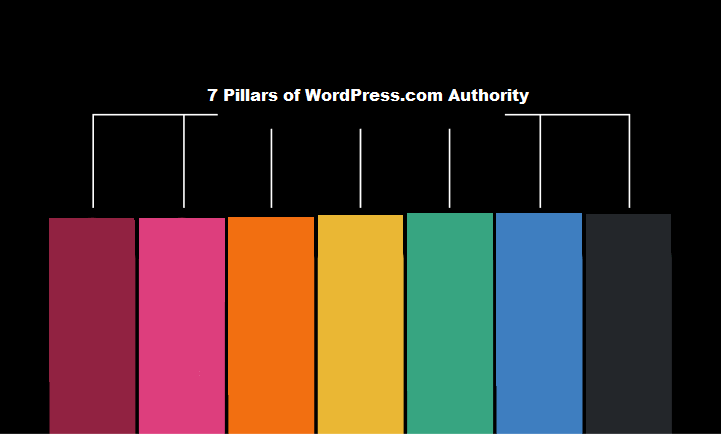
After years of building authority in the blogging and WordPress space with modest traffic, here are the seven pillars that truly matter.
Pillar 1: Deep, Experience-Driven Expertise
Authority comes from demonstrable knowledge. Not theoretical “I read about this somewhere” content, but “I’ve done this 50 times and here’s exactly how it works” expertise.
How This Looks in Practice:
❌ Instead of: “10 Ways to Grow Your Blog”
✔️ Write: “I Tested 10 Blog Growth Strategies for 6 Months. Here’s What Actually Worked (With Screenshots)”
❌ Instead of: “Best WordPress Themes for Bloggers.”
✔️ Write: “I Built 8 Client Sites with Different WordPress.com Themes. Here’s When to Use Each One”
See the difference? One is generic advice anyone could write. The other proves you’ve actually done the work.
My Authority-Building Content Formula:
- Test/experience something thoroughly (products, strategies, tools)
- Document specific results (numbers, screenshots, timelines)
- Share honest insights (what worked, what didn’t, why)
- Provide actionable steps (readers can replicate your process)
This approach works with 500 monthly visitors because every reader who implements your advice becomes proof of your expertise.
Pillar 2: Consistent, High-Quality Output
You don’t need to publish daily. You need to publish consistently at a quality level that makes people say, “Damn, this is good.”
I publish one long-form article per week. Sometimes two. That’s 50-100 articles per year.
Juan, my fellow blogger who blogs about productivity, publishes twice per week. Different rhythm, same principle: consistent, high-quality content.
The Consistency Formula That Works:
- Pick a publishing schedule you can maintain for 12+ months
- Never sacrifice quality for frequency
- Aim for posts that take 3-5 hours to create (research + writing + editing)
- Each post should be significantly better than what’s already ranking
My average article is 2,500-4,500 words. That’s not because long content ranks better (though it helps), but because deep, comprehensive content builds authority better than surface-level fluff.
Real Numbers:
- First 6 months: Published 32 articles, averaged 890 views/month
- Months 7-12: Published 28 articles, averaged 1,800 views/month
- Months 13-18: Published 24 articles, averaged 2,400 views/month
Notice the pattern?
Fewer articles, more traffic. Why? Because consistent quality compounds. Early articles started ranking. Backlinks accumulated. Authority grew.
Pillar 3: E-E-A-T Optimization (Experience, Expertise, Authoritativeness, Trustworthiness)
Google’s E-E-A-T guidelines aren’t just for search rankings. They’re literally a blueprint for building real authority.
How to Signal E-E-A-T on WordPress.com:
Experience (Most Important):
- Share personal stories and case studies
- Include specific numbers and results
- Show before/after examples
- Admit failures and what you learned
- Reference your actual workflow and tools
Example: Instead of “WPX Hosting is fast,” I wrote: “I migrated to WPX in 2020. Page load time dropped from 3.2s to 1.1s. Here’s my GTmetrix report and how I did it.”
Expertise:
- Demonstrate deep knowledge through comprehensive guides
- Use correct terminology (but explain it)
- Reference authoritative sources
- Show you understand nuances and edge cases
Authoritativeness:
- Build a strong author bio (WordPress.com makes this easy)
- Get mentioned/linked by other authority sites
- Guest post on established blogs
- Collect and display testimonials
- Win awards or recognition in your niche
Trustworthiness:
- Be transparent about affiliations and sponsorships
- Correct mistakes publicly
- Update old content when information changes
- Respond to comments and emails
- Never recommend something you haven’t personally used
Pillar 4: Strategic Internal Linking (Building Topical Authority)
WordPress.com makes internal linking stupidly easy. Use it to build topical authority clusters around your core expertise areas.
What Is a Topic Cluster?
One comprehensive “pillar post” covering a broad topic, with multiple supporting posts diving deep into specific aspects, all internally linked together.
My WordPress Topic Cluster:
- Pillar: My WordPress.com Blogging Comeback: Falling In Love Again (5,000 words)
- Cluster posts:
- WordPress.com vs WordPress.org: Which is for Bloggers?
- Best WordPress Themes for Content Creators
- WordPress Plugins That Actually Matter
- How to Sell Digital Products with WooCommerce
- Best WordPress Hosting for Creators
- Each cluster’s post links back to the pillar
- Pillar links to all cluster posts
This structure tells both search engines and readers: “Hey, I’m THE authority on WordPress for bloggers.”
Internal Linking Strategy:
- Link new posts to 3-5 relevant older posts
- Update old posts to link to new related content
- Use descriptive anchor text (“Honest WordPress.com hosting review,” not “click here”)
- Keep links contextual and helpful, not spammy
After implementing topic clusters in month 8, my rankings improved across ALL WordPress-related keywords, not just individual posts.
Pillar 5: External Recognition and Backlinks
Getting other sites to reference you is authority gold. But you don’t need thousands of backlinks. You need quality recognition from respected sources.
How I Built Backlinks Without Begging:
1. The Skyscraper Technique (That Actually Works):
- Find mediocre content ranking for valuable keywords
- Create something 10x better, more comprehensive, more actionable
- Reach out to sites linking to the mediocre content: “Hey, I noticed you linked to X. I just published a more comprehensive guide that your readers might find helpful.”
Success rate: About 12%. But even 3-4 quality backlinks from this move the needle.
2. Original Research and Data:
- Publish surveys, case studies, or experimental results
- Other bloggers will reference your data (with links)
My “I Tested 7 WordPress Hosts for 30 Days” post got 23 backlinks because I provided original performance data nobody else had.
3. Help a Reporter Out (HARO):
- Sign up for HARO (free)
- Respond to journalist requests in your niche
- Get quoted in major publications
I’ve been featured in articles on high authority sites (small mentions, but still) just from responding to HARO queries. Free authority signals.
4. Guest Posting Strategically:
- Don’t spam guest posts everywhere
- Write for 2-3 highly relevant, respected sites in your niche
- Make the content exceptional (not recycled blog filler)
I guest-posted on two established WordPress blogs. Combined, those posts sent 400 visitors, 12 email subscribers, and 8 backlinks from other sites that discovered me through the guest posts.
5. Create Linkable Assets:
- Comprehensive guides
- Free tools or templates
- Industry reports
- Infographics with data
- Resource lists
These naturally accumulate links over time without outreach.
Pillar 6: Engagement and Community Building
Authority isn’t just publishing content into the void. It’s engaging with people, building relationships, and becoming a recognized voice in your space.
WordPress.com Community Tactics:
WordPress Reader Strategy:
- Follow blogs in your niche (use tags like #blogging, #wordpress, #contentcreation)
- Leave thoughtful comments on posts (not “Great post!” but actual insights)
- Like posts genuinely helpful
- People check out who’s engaging and discover your blog
This is how I got my first 50 real readers. Not SEO. Not social media. WordPress Reader community engagement.
Comment Section Management:
- Respond to EVERY comment in your first year
- Ask follow-up questions
- Encourage discussion
- Show you’re an accessible expert, not an ivory tower guru
My most popular post has 42 comments. I responded to all 42. Three of those commenters became email subscribers. One hired me for consultation.
Email List Building:
- Start collecting emails from day one
- WordPress.com makes newsletter integration easy
- Offer a simple content upgrade or lead magnet
- Send weekly value (not sales pitches)
I send one email per week. Usually, my new blog post includes a personal insight or behind-the-scenes note. Open rate: 38%. Industry average: 21%. Authority enables better engagement.
Social Media (But Not What You Think):
- You don’t need 10K followers
- Pick ONE platform where your audience hangs out
- Share your best content consistently
- Engage with others in your niche
- Build relationships, not follower counts
I have a few followers Twitter/X and LinkedIn. Diane has 8000 Instagram followers. Neither of us are “influencer,” but our audiences are engaged and trust us.
Pillar 7: Transparent Personal Branding
People don’t trust faceless brands anymore. They trust individuals with real names, real faces, real stories.
WordPress.com Personal Branding Elements:
Strong About Page: Your About page might be your most important page for building authority.
Mine includes:
- My story (why I started blogging about WordPress)
- My credentials (years of experience, clients served, results achieved)
- What I stand for (honest reviews, no BS, practical advice)
- What I’ve accomplished (milestones, features, awards)
- How can we help readers
- Personal touch (camera-shy, love wine/whiskey, have a studio apartment)
Author Bio (On Every Post): WordPress.com lets you add an author bio below posts. Use it.
Include:
- Your name and expertise
- Quick credibility statement
- Link to the About page or contact
- Optional: headshot (even for camera-shy people like me)
Consistent Voice: Authority doesn’t mean formal. It means authentic and consistent.
I write like I talk: casual, occasionally profane, humorous but professional. That’s MY voice. Your voice might be different. Just be consistent.
Readers should recognize your writing style within three sentences.
Transparency About Failures: Authority figures who admit mistakes are MORE trusted, not less.
I’ve written about:
- Hosting migrations that went wrong
- Plugins that broke my site
- Affiliate products I promoted, then regretted
- SEO strategies that flopped
Every “failure post” gets higher engagement than “success posts” because people relate to struggle more than perfection.
Publish like a pro. Grow your authority on WordPress.com ➜
WordPress.com Authority Accelerators (Practical Tactics)

Beyond the seven pillars, here are specific WordPress.com features and tactics that accelerate authority building:
Use WordPress.com Business Plan (Or Higher) for a custom domain
Authority Signal: yourname.com >>> yourname.wordpress.com
Custom domains look professional. They’re memorable. They signal “I’m serious about this.”
WordPress.com Business plan ($25/month) includes:
- Custom domain
- Plugin access
- Remove WordPress.com branding
- Advanced customization
Worth every penny once you’re committed to building authority.
Build Your Authority on WordPress.com’s Business Plan Today ➜
Leverage Jetpack’s Built-In Features
Every WordPress.com plan includes Jetpack. Use these authority-building features:
Site Stats: Track what content resonates. Double down on those topics.
Related Posts: Keep readers on your site longer. Show depth of expertise.
Social Media Automation: Auto-share new posts. Save time, stay consistent.
Subscriptions: Email and comment subscriptions. Build your audience directly.
Site Verification: Verify with Google Search Console. Monitor search performance.
Optimize Your WordPress.com Theme for Authority
Some themes signal authority better than others.
Authority-Building Theme Characteristics:
- Clean, professional design
- Easy-to-read typography
- Prominent author bio section
- Good mobile experience
- Fast loading
- Space for featured images
Recommended WordPress.com Themes for Authority:
- Astra Theme (journalism-style, authoritative)
- Kadence (clean, modern, fast)
- GeneratePress (lightweight, readable, professional)
- Livro (book-like, text-focused, scholarly)
I use a customized version of Kadence. Looks professional, loads fast, puts content first.
Create an “As Featured In” Section

Even small mentions count. Create a page or sidebar widget showcasing where you’ve been mentioned, quoted, or featured.
My “As Featured In” Section:
- Pressidium (HARO quote)
- WordPress.com (landing page)
- Kinsta Blog (guest post)
- WPBeginner Forum (helpful answer)
- Client testimonials
None of these is Oprah-level, but together they signal: “Other people recognize this person’s expertise.”
Publish Case Studies and Results
Nothing builds authority like proven results.
Case Study Format That Works:
- Challenge/problem
- Solution/strategy you implemented
- Specific results (numbers, screenshots, timeline)
- Lessons learned
- How readers can replicate
I published a case study: “How I Grew Blog Traffic from 400 to 2,400 Monthly Visitors in 12 Months.”
Results: 1,200 views, 18 email signups, 2 consultation requests.
Why? Because it proved I knew how to grow a blog through demonstrated results, not theory.
Answer Questions Authoritatively
Find questions in your niche and provide the BEST answer anywhere on the internet.
Where to Find Questions:
- Quora (search your niche keywords)
- Reddit (relevant subreddits)
- WordPress.com Reader (check comments)
- Facebook groups
- Twitter/X threads
- Google “People Also Ask”
Write blog posts answering these questions comprehensively. Not 300-word fluff. Full 1,500-2,500-word deep dives.
I wrote “WordPress.com vs WordPress.org: The Complete Comparison,” answering the single most common WordPress question. That post:
- Gets 400-500 views/month consistently
- Ranks page 1 on Google for multiple keywords
- Has 8 backlinks from other blogs
- Sent me 3 consulting clients
One authoritative answer to one common question can build lasting authority.
Update Old Content Regularly
Authority isn’t just creating new content. It’s maintaining accuracy and relevance.
My Content Update Schedule:
- Review all posts every 6-12 months
- Update outdated information (prices, features, screenshots)
- Add new insights based on recent experience
- Improve formatting and readability
- Add internal links to newer related posts
- Update publish date (WordPress.com shows “last updated”)
Updated posts rank better, convert better, and signal “this author keeps content current and accurate.”
Ready to look legit? Build your authority on WordPress.com ➜
Metrics That Measure Authority (Forget Pageviews)

Stop obsessing over traffic. Track these authority indicators instead:
1. Return Visitor Rate
What It Means: Percentage of visitors who come back.
Authority Benchmark: A 30%+ return rate shows people trust you enough to return.
How to Improve: Consistent quality, email newsletters, and engaging with commenters.
My return rate: 42%. More than half my traffic comes from people who’ve read me before. That’s authority.
2. Time on Page
What It Means: How long people actually read your content.
Authority Benchmark: 3+ minutes for long-form content.
How to Improve: Write better, more engaging content. Add stories. Break up text.
My average time on page: 4 minutes 18 seconds. People read what I write because they trust it’s worth their time.
3. Email Signup Rate
What It Means: Percentage of visitors who subscribe to your email list.
Authority Benchmark: 2-5% is solid for content blogs.
How to Improve: Offer valuable lead magnets. Make signup forms prominent but not annoying.
My signup rate: 3.2%. Not amazing, but these are quality subscribers who actually open emails and engage.
4. Backlink Quality (Not Quantity)
What It Means: Reputable sites linking to your content.
Authority Benchmark: 10-20 quality backlinks from DA 40+ sites in your niche.
How to Improve: Create linkable content. Do outreach. Guest post strategically.
I have 37 backlinks from 28 unique domains. Most are DA 30-50 WordPress and blogging sites. That’s more valuable than 200 backlinks from random spam sites.
5. Direct Traffic Percentage
What It Means: People typing your URL directly or coming from bookmarks.
Authority Benchmark: 20%+ direct traffic shows brand recognition.
How to Improve: Build a memorable brand. Encourage bookmarking. Email marketing.
My direct traffic: 28%. People remember Blog Recode and come directly. That’s authority.
6. Engagement Rate
What It Means: Comments, shares, and saves relative to traffic.
Authority Benchmark: 1-2% engagement rate is healthy.
How to Improve: Ask questions. Respond to every comment. Create share-worthy content.
My engagement: About 1.8%. Not every post gets comments, but engaged readers are worth 10x passive scrollers.
7. Conversion Rate (For Your Goals)
What It Means: Percentage of visitors taking desired action (newsletter signup, product purchase, contact form).
Authority Benchmark: Depends on the goal. 1-3% for email, 0.5-2% for sales/contacts.
How to Improve: Clear CTAs. Prove you’re trustworthy. Remove friction.
My consultation request rate: 0.8%. Doesn’t sound like much, but 2-3 consultation requests per month from 2,400 visitors is valuable business.
Your ideas deserve trust. Build that authority with WordPress.com ➜
Real Timeline: Building Authority on WordPress.com (What to Expect)

Let’s set realistic expectations. Authority doesn’t happen overnight.
Months 1-3: Foundation Phase
- Publish 8-15 high-quality posts
- Set up a proper about page, author bio
- Start engaging on WordPress Reader
- Begin email list (expect 0-20 subscribers)
- Traffic: 100-500 monthly visitors
- Authority Level: Unknown beginner
Months 4-6: Recognition Phase
- Publish 10-15 more posts
- First backlinks start appearing
- Email list grows to 50-100 subscribers
- People start commenting regularly
- Maybe the first guest post opportunity
- Traffic: 500-1,200 monthly visitors
- Authority Level: Emerging voice
Months 7-12: Establishment Phase
- Publish 15-25 posts (can be fewer if updating old content)
- Multiple topic clusters established
- Email list 100-300 subscribers
- Recognized in the WordPress Reader community
- First mentions/features on other blogs
- Traffic: 1,200-3,000 monthly visitors
- Authority Level: Established in a micro-niche
Months 13-18: Growth Phase
- Publish 12-20 posts (quality over quantity)
- Authority compounds—old posts start ranking
- Email list 300-600 subscribers
- Regular consultation/collaboration requests
- Several quality backlinks
- Traffic: 2,000-5,000 monthly visitors
- Authority Level: Recognized authority in niche
Months 19-24: Authority Phase
- Publish 10-15 posts (highly strategic)
- Referenced by other authorities
- Email list 600-1,200 subscribers
- Monetization opportunities appear
- Speaking/podcast invitations
- Traffic: 4,000-10,000 monthly visitors
- Authority Level: Go-to expert
This timeline assumes consistent effort (10-15 hours/week) and quality focus. Your mileage may vary based on niche competitiveness and your starting point.
Make your name the one people trust. Start on WordPress.com ➜
Common Authority-Building Mistakes (I Made Most of These)
Learn from my expensive lessons:
Mistake 1: Chasing Traffic Instead of Trust
Spent my first 6 months optimizing for traffic. Got 3K monthly visitors. Made $0. Had zero influence.
Shifted to an authority-first approach. Traffic dropped to 2K. Made $3,200 in consulting that quarter. Had multiple brands reach out for partnerships.
Lesson: 2,000 trusting visitors > 10,000 random visitors.
Mistake 2: Publishing Too Frequently at Low Quality
Tried publishing daily for 30 days. Burnt out. Content quality suffered. Traffic didn’t grow.
Switched to one deep, researched post weekly. Traffic grew faster. Authority grew dramatically.
Lesson: Consistency at high quality beats frequency at mediocre quality.
Mistake 3: Ignoring Email List Building
Didn’t start email list until month 8. Lost 8 months of audience building.
Started list. Within 4 months had 200 engaged subscribers worth more than 5,000 random monthly visitors.
Lesson: Start building an email list from day one. It’s your most valuable authority asset.
Mistake 4: Not Updating Old Content
Published great content, then forgot about it. Information became outdated. Rankings dropped.
Started quarterly content audits. Updated old posts. Rankings improved. Authority signals strengthened.
Lesson: Authority requires maintenance, not just creation.
Mistake 5: Being Too Promotional
Early posts felt like sales pitches. Readers sensed it. Trust didn’t build.
Shifted to 90% value, 10% promotion. Authority skyrocketed. Ironically, conversions increased too.
Lesson: Authority comes from giving value, not extracting value.
Mistake 6: Copying Others’ Voices
Tried writing like popular bloggers in my niche. Sounded fake and generic.
Found my authentic voice (casual, profane, funny but professional). Readers responded dramatically better.
Lesson: Authority requires authenticity. Your voice is your differentiator.
Mistake 7: Avoiding Controversy or Strong Opinions
Wrote safe, vanilla content everyone would agree with. Nobody cared.
Started sharing strong, honest opinions. Some people disagreed. But engaged readers increased 3x.
Lesson: Authority requires conviction, not consensus.
Build a site people believe in. WordPress.com has your back ➜
WordPress.com Authority-Building Tools and Plugins

Once you’re on Business plan or higher, these tools accelerate authority building:
SEO Optimization:
- Rank Math or SEOPress (Business plan+)
- Optimize every post for search and readability
- Built-in schema markup for E-E-A-T signals
Email Marketing:
- Beehiiv integration (built-in)
- Kit (my choice, integrates easily)
- MailerLite (free up to 1,000 subscribers)
Social Proof:
- Testimonials Widget (display social proof)
- Trust Badges (credibility signals)
Analytics:
- MonsterInsights (Google Analytics for WordPress)
- Jetpack Stats (simpler alternative, built-in)
Engagement:
- Disqus or native WordPress comments (both work)
- Social Warfare (share buttons that convert)
Content Upgrades:
- Beacon (create lead magnets easily)
- Canva (design graphics, mockups)
Authority Signals:
- Author Box plugins (Business plan+)
- Schema markup plugins (E-E-A-T optimization)
I use: Rank Math, Kit, Jetpack Stats, Canva, and native WordPress comments.
Total cost: ~$50/month. Worth every penny for authority building.
Let’s make you the go-to expert. Launch your site on WordPress.com today ➜
My Personal Authority-Building Weekly Workflow

People ask how I manage authority building alongside everything else. Here’s my actual weekly schedule:
Monday (3 hours):
- Research new post topic
- Outline structure
- Gather screenshots/data
Tuesday (4 hours):
- Write the first draft
- Add personal stories/examples
- Include internal links
Wednesday (2 hours):
- Edit and refine
- Optimize for SEO (Rank Math)
- Create featured image (Canva)
Thursday (1 hour):
- Final proofread
- Schedule post
- Prepare social media content
Friday (2 hours):
- Publish post
- Respond to comments from previous posts
- Engage on WordPress Reader (20-30 minutes)
- Email newsletter with a new post
Weekend (1 hour):
- Monitor new post performance
- Answer emails/comments
- Update one old post if needed
Total: 13 hours per week
This rhythm produces one comprehensive authority-building post weekly while maintaining engagement and community presence.
Some weeks I work more (launching a new product, creating a lead magnet). Some weeks less (taking breaks to avoid burnout).
Consistency matters more than intensity.
Advanced Authority Tactics (Once You Have a Foundation)
After 12-18 months of building authority foundation, level up with these advanced tactics:
1. Create an Authority Hub Resource
Build a comprehensive resource page that becomes THE go-to reference in your niche.
Example: “The Complete WordPress Resource Hub for Bloggers”
- Links to your best guides
- External resources (tools, tutorials, communities)
- Updated quarterly
- Designed to be bookmarked
This page becomes a link magnet and an authority signal.
2. Launch a Signature Course or Product
Transform your authority into a flagship offering.
I’m developing a “WordPress Mastery for Content Creators” course. Why?
- Proves comprehensive expertise
- Provides monetization beyond consulting
- Elevates positioning from “blogger” to “educator.”
Even if it doesn’t sell well initially, having a signature product signals serious authority.
3. Start Speaking/Teaching
Offer to speak at:
- Virtual summits
- Webinars
- Podcasts
- Local meetups
- WordCamps (WordPress conferences)
I’ve invited to 6 podcasts and 2 virtual summits. Each appearance:
- Reinforces authority positioning
- Reaches new audiences
- Generates backlinks
- Creates repurposable content
Camera-shy like me? Start with podcasts (audio only) or written guest posts.
4. Publish Original Research
Survey your audience. Test strategies. Publish findings.
“I Analyzed 100 Successful WordPress Blogs. Here’s What They Have in Common.”
Original data gets cited, linked, and shared more than opinion pieces.
5. Build Strategic Partnerships
Partner with complementary authorities:
- Joint webinars
- Bundle products
- Cross-promote content
- Collaborate on resources
I partnered with a WordPress theme developer for a joint guide. Both our audiences benefited. Both our authorities increased.
6. Get Featured in Roundup Posts
Many sites publish “expert roundup” posts. Contribute quotes when invited.
“30 WordPress Experts Share Their #1 Tip for Beginners.”
Even small mentions in these posts:
- Build backlinks
- Increase visibility
- Associate you with other recognized authorities
7. Create Video or Podcast Content
Written content builds authority. Multimedia content amplifies it.
I’m camera-shy and don’t have a podcast YET, but I’m planning to overcome that camera shyness. Video/audio adds a personal connection that strengthens authority.
Start simple:
- Screen recordings with voiceover
- Audio-only podcast
- Short tutorial videos
Don’t let perfectionism stop you. Consistent mediocre video beats a perfect video that never ships.
Authority Mindset Shift (Most Important Section)

Everything I’ve shared is tactical. But authority building requires a fundamental mindset shift.
From Consumer to Creator
Stop consuming endless content. Start creating definitive content.
Authority figures create reference material that others consume and cite.
From Generalist to Specialist
“I write about everything” builds zero authority. “I’m THE WordPress expert for course creators” builds massive authority.
Narrow your focus. Go deep, not wide.
From Perfect to Consistent
Done is better than perfect. A published imperfect post builds more authority than an unpublished perfect post.
Authority comes from consistent visibility, not occasional perfection.
From Humble to Confident
False humility undermines authority. “I’m just a beginner figuring things out” doesn’t inspire trust.
“I’ve built 30+ WordPress sites, and I’m sharing everything I’ve learned” inspires confidence.
Be honest about limitations, but own your expertise confidently.
From Reactive to Proactive
Don’t wait for recognition. Create it.
Reach out for guest posts. Ask for testimonials. Pitch yourself as an expert contributor. Submit to HARO. Comment on others’ content.
Authority builders make their own opportunities.
From Traffic-Focused to Impact-Focused
Stop checking analytics obsessively. Start tracking impact.
- Did someone implement your advice and succeed? That’s authority.
- Did another site reference your content? That’s authority.
- Did a brand reach out for collaboration? That’s authority.
These matter more than pageviews.
Want people to trust your content? Give it a WordPress.com home ➜
Real Talk: Is WordPress.com Authority Building Worth It?
After years of focused authority building on WordPress.com, here’s my honest assessment:
The Investment:
- 10-15 hours per week consistently
- $25-50/month (hosting, tools, email)
- 12-18 months before significant results
- Emotional energy (dealing with criticism, self-doubt, impostor syndrome)
The Returns:
- $3,500/month average income (consultation, products, affiliates)
- Regular opportunities (speaking, partnerships, collaborations)
- Network of respected peers
- Satisfying work helping people solve real problems
- Freedom to work on my terms
Worth it? Absolutely yes, for me.
But I’m clear-eyed about trade-offs. Building authority isn’t passive. It requires consistent effort, genuine expertise development, and long-term thinking.
If you want quick money, authority building isn’t the path. There are faster ways to make $1,000.
If you want a sustainable income doing work you enjoy while building something meaningful, authority building might be perfect.
Only you can decide if the investment matches your goals and values.
Your Authority-Building Action Plan (30 Days to Start)

Overwhelmed? Start here. Simple 30-day plan to begin building WordPress.com authority:
Week 1: Foundation
- Set up a WordPress.com account (free to start)
- Choose your specific niche/audience
- Create a strong About page
- Write first comprehensive post (2,000+ words on your core expertise)
Week 2: Content & Optimization
- Write the second comprehensive post
- Optimize both posts for SEO (Rank Math/SEOPress if on Business plan)
- Create author bio
- Set up email capture (Kit, MailerLite, or Beehiiv)
Week 3: Engagement & Community
- Write the third post
- Engage on WordPress Reader (follow 20-30 relevant blogs)
- Leave thoughtful comments on 10-15 posts
- Respond to any comments on your blog
- Share posts on one social platform
Week 4: Growth Systems
- Write the fourth post
- Create a simple lead magnet (checklist, template, guide)
- Plan next 8-12 post topics (topic cluster strategy)
- Update the About page with any new credentials
- Review analytics—what’s resonating?
After 30 Days:
- You have 4 comprehensive posts published
- The email capture system is live
- Active in the WordPress.com community
- Clear content plan for the next 3 months
- The foundation for authority building was established
Then repeat the cycle: publish consistently, engage genuinely, improve continuously.
Authority builds one post, one interaction, one insight at a time.
Claim your spot as the authority in your niche. WordPress.com can get you there ➜
Final Thoughts: Authority Is a Marathon, Not a Sprint
A few years ago, I had zero authority. Zero reputation. Zero recognition. Just determination to build something real in the WordPress space.
Today, I’m not Darren Rowse or Pat Flynn. I’m not a household name. My blog doesn’t get 100K monthly visitors.
But I’ve built genuine authority in my micro-niche. People trust my WordPress advice. Brands want to work with me. Readers implement my strategies and get results.
That’s more valuable than any traffic number.
What I wish I knew a few years ago:
Authority isn’t about being famous. It’s about being trusted.
You don’t need thousands of views to build authority. You need dozens of people who trust you deeply.
Your unique voice, experience, and perspective are more valuable than any technique or tactic.
Consistency compounds. Every post, every engagement, every bit of value you provide builds on the previous one.
The people who build lasting authority aren’t the most talented. They’re the most persistent.
My Challenge to You:
Stop waiting for permission to position yourself as an authority. Stop waiting until you “know enough.”
Start sharing what you know right now. Document your journey. Help people solve problems.
Authority isn’t something you have or don’t have. It’s something you build, deliberately and consistently, one valuable contribution at a time.
WordPress.com gives you the platform. You provide the expertise and consistency.
The authority you build over the next 12-18 months will compound for years. Start today.
– Mia
FAQs
How long does it take to build authority on WordPress.com?
Realistically, 12-18 months of consistent effort to establish recognizable authority in your niche. You’ll see early indicators (backlinks, engagement, recognition) around month 6-8, but solid authority where brands/clients seek YOU out typically takes 12-24 months.
I started seeing real authority signals at month 10. By month 18, I was regularly getting consultation requests and partnership inquiries.
Don’t let this timeline discourage you. Authority compounds. Every post, every engagement, every backlink builds on the previous one.
Months 18-24 are dramatically easier than months 1-6 because you’ve built momentum.
Can I build authority on a free WordPress.com plan?
Yes, but it’s harder. Free plan limitations:
- yourname.wordpress.com domain (less professional)
- WordPress.com branding (dilutes your brand)
- No plugins (limits optimization)
- Limited customization
Can you build authority with these constraints? Absolutely. Will it take longer and be more challenging? Yes.
My recommendation: Start free to test the waters. Once you’re committed (3-6 months in), upgrade to at least the Personal plan ($4/month) for a custom domain. When ready to scale authority, upgrade to Business plan ($25/month) for full plugin access.
The $25/month investment pays for itself quickly once authority translates to opportunities (clients, partnerships, sponsored content).
Do I need thousands of social media followers to build authority?
Hell no. This is one of the biggest myths killing people’s confidence.
I have a few Twitter followers, a few LinkedIn connections, and I’m barely on Instagram. Yet I’ve built strong authority in the WordPress and blogging space.
Why? Because authority comes from DEPTH of connection, not WIDTH of reach.
10 engaged followers who trust your expertise and implement your advice are worth more than 10,000 passive followers who scroll past your content.
Focus on:
- Creating exceptional content
- Engaging deeply with your actual readers
- Building email list (you own this, unlike social followers)
- Getting recognition from established authorities
Social media can amplify authority, but it doesn’t create it. Content quality and genuine expertise create authority.
What’s the minimum publishing frequency to build authority?
One comprehensive, high-quality post per week is the minimum I’d recommend for steady authority building.
That’s 52 posts per year. Enough to:
- Build topic clusters around your expertise
- Stay top-of-mind with readers
- Generate backlinks and shares
- Rank for multiple keywords
- Demonstrate consistent expertise
Some successful authority bloggers publish twice per week. Some publish twice per month. The key is CONSISTENCY at HIGH QUALITY.
Publishing daily with mediocre content won’t build authority. Publishing monthly with exceptional, comprehensive content will.
Find a rhythm you can maintain for 12+ months without burning out. Consistency beats intensity.
How do I know what topics to write about for authority building?
Focus on the intersection of three things:
- Your genuine expertise (things you’ve actually done/tested)
- Your audience’s pain points (problems they need solved)
- Gaps in existing content (questions poorly answered elsewhere)
My Topic Selection Process:
Step 1: List 5-10 topics you have deep, hands-on experience with.
Step 2: Research what questions people ask about these topics (Google, Quora, Reddit, WordPress.com Reader, Facebook groups).
Step 3: Google those questions. Read the top 5-10 results. Ask yourself: “Could I write something significantly better, more comprehensive, more actionable?”
Step 4: If yes, write that post. If no, move to the next question.
Authority Rule: Only write about topics where you have genuine expertise and can provide unique value based on personal experience.
Don’t write “Top 10 WordPress Plugins” if you haven’t personally used all 10. Write “5 WordPress Plugins I’ve Used on 20+ Client Sites (And When to Use Each One).”
The second approach builds authority. The first dilutes it.
Should I accept guest post opportunities to build authority?
Yes, but be strategic. Quality over quantity.
Guest Posting for Authority:
Good Opportunities:
- Established, respected blogs in your niche
- Sites with engaged audiences (check comments)
- Publications that link to your bio/site
- Platforms where your target audience hangs out
Skip These:
- Low-quality content farms
- Sites with zero engagement
- “Pay to play” opportunities (usually)
- Irrelevant niches
I’ve guest-posted on 4 sites total in 3 years. All were established WordPress/blogging sites with engaged audiences. Those 4 posts brought:
- 600+ targeted visitors
- 15 email subscribers
- 12 backlinks (from other sites discovering me)
- 2 consulting clients
Focus on 2-3 strategic guest posts per year rather than spamming 20 low-quality sites.
How important are author credentials for WordPress.com authority?
Very important, but “credentials” doesn’t mean degrees or certifications.
Authority Credentials That Matter:
- Years of hands-on experience
- Number of projects completed
- Results you’ve achieved
- Clients served
- Recognition from peers
- Testimonials from satisfied readers/clients
I don’t have a degree in computer science or a WordPress certification. My credentials are:
- 7 years using WordPress professionally
- 30+ client websites built
- Blog Recode has been running since 2018
- Featured on Pressidium, mentioned in Forbes
- Thousands of email subscribers who trust my advice
- Clients who’ve implemented my strategies successfully
Those credentials matter more than any certificate.
Build Your Credentials Through:
- Documenting your experience on your About page
- Sharing specific case studies and results
- Collecting and displaying testimonials
- Getting recognized/mentioned by established authorities
- Consistently demonstrating expertise through content
Start where you are. If you’re new, your credential is “I’m documenting my journey and sharing everything I learn.” That’s authentic and valuable.
As you gain experience, update your credentials. Authority grows as your genuine expertise grows.
Can I monetize my WordPress.com blog while building authority?
Yes, but approach it carefully. Aggressive monetization can undermine authority building.
Monetization That Preserves Authority:
Good:
- Affiliate recommendations for products you genuinely use (with disclosure)
- Sponsored posts that align with your values (marked as sponsored)
- Selling your own digital products/services
- Consultation/coaching based on your expertise
- High-quality partnerships with relevant brands
Bad:
- Spammy affiliate links everywhere
- Promoting products you haven’t used
- Ads that destroy user experience (pop-ups, auto-play videos)
- Sponsored content that contradicts your advice
- Selling your editorial integrity
I monetize through:
- Honest affiliate recommendations (disclosed)
- Occasional sponsored posts (clearly marked, products I’ve tested)
- Consultation services
- Digital products (templates, guides)
Revenue: ~$3,500/month with 2,400 monthly visitors. Possible because authority enables higher conversion rates.
Focus on building authority first (6-12 months). Monetization becomes easier once people trust you.
What if someone challenges my authority or calls me out?
This WILL happen if you’re building real authority. It’s actually a good sign.
How to Handle Challenges:
If the criticism is valid:
- Acknowledge it publicly
- Thank them for the correction
- Update your content
- Explain what you learned
Example: I wrote that WPX Hosting had unlimited bandwidth on all plans. The reader pointed out that it’s only on the Elite plan. I thanked them, corrected the post, and added a note: “Thanks to Naima for catching my error. Updated 08/2025.”
Result: My credibility INCREASED. People respect experts who admit mistakes.
If the criticism is unfair:
- Respond professionally with facts
- Don’t get defensive or emotional
- Provide evidence for your position
- Don’t engage in arguments
Real authority isn’t threatened by disagreement. It’s strengthened by handling it gracefully.
How do I build authority in a crowded niche?
Narrow your focus. Don’t try to be an authority on “WordPress” (too broad). Be an authority on “WordPress for course creators” or “WordPress ecommerce for handmade businesses.”
Micro-Niche Authority Strategy:
- Define Your Specific Audience:
- Not “bloggers” but “mom bloggers monetizing through sponsored content.”
- Not “WordPress users” but “coaches building WordPress membership site.s”
- Go Deeper Than Competitors:
- They write 1,000-word overviews
- You write 3,000-word comprehensive guides
- They cover basics
- You cover advanced tactics and edge cases
- Build Relationships Within Micro-Niche:
- Connect with the 20-30 other creators in your specific space
- Collaborate, guest post, reference each other
- Rising tide lifts all boats
- Own One Thing:
- Be THE resource for one specific thing
- For me: honest, practical WordPress advice for content creators
- What’s your ONE thing?
Easier to be #1 in a micro-niche than #50 in a broad category.
P.S. The blog post that changed my trajectory got 697 views. Don’t discount small wins. Sometimes the most impactful content isn’t the most viewed content.
P.P.S. If you’re waiting to feel “ready” to start building authority, you’ll wait forever. Start imperfect. Improve as you go. That’s how everyone with authority actually did it.
P.P.P.S. Authority building is lonely sometimes. Most people won’t understand why you spend 4 hours writing a blog post for 300 views. That’s okay. The right people will find you, trust you, and value what you create. Focus on them.